In March 2020, about one month into the COVID19 lockdown in Canada, I decided that it was time to resurrect that old hobby of mine – playing video games. I am not a serious gamer, I am not a competitive gamer but I enjoy certain games. Back in the day, I completed the full game of GTA Vice City and loved it. I loved that you could drive a tank, shoot at the cops and even commandeer a police helicopter. I also loved the in-game radio stations and those radio stations were how I discovered several metal bands including Iron Maiden, Judas Priest and Slayer. The Vice City radio stations were also my first introduction to US talk radio and some of the insanity that people peddle via AM radio “flamethrowers”.
Besides Vice City, I loved playing the Fifa football series, mostly because I loved football. Some of my friends owned PlayStation 2s or Xboxes but PC gaming was for me. There was a certain thrill to playing a game that was not supposed to work on your system, because your hardware was too old or too weak.
Back to 2020. Via reddit, I discovered that several game studios were handing out free games and I created an Epic Games account solely for the Tomb Raider giveaway. That was the first game franchise that I recognized, so I had to see what the new games were like. Very good. I downloaded the game and started playing on my 2015 Thinkpad, and the experience was mediocre. The laptop hardware was old and not designed for gaming. I had to get a better tool for the job so a gaming computer it was. True to my Indian heritage, I scoured Farcebook and found someone, relatively far away from our home selling a used PC. At the time, I had not owned a PC for almost a decade and only used laptops and I had no idea how to decode hardware specs. Ok, the inter webs and YouTuba had the answers, but the answers would take hours of decoding and understanding to be useful. So I decided to just buy the computer and figure it out from there.
I ended up with an AMD Zen 2 processor which was relatively ok for the time and an AMD RX580 graphics card. At the time, I had no idea what any of this even meant so I fired up some games and decided to see how they worked. They worked well! So well that I decided to make my first game purchase on Steam, incidentally the first game I bought legally and digitally. To be clear, I had purchased games in the past, just on CDs and DVDs. This time, I paid for Assassins Creed Origins and had a blast with the game. It looked amazing, the game was enjoyable and I loved the ability to switch between a controller and a mouse depending on the situation in-game. Eventually, I bought more controllers, a $ 50 PS4, a PS Vita and finally a Steam Deck. Gaming during the pandemic was excellent. I played a few online games, lost Fifa football matches to kids in Brazil and India, and even resumed playing Age of Empires!
I love PC gaming. I love the options it gives you and the fact that piracy is still possible. Piracy, however, is not strictly necessary. My Stream library includes about 10 games that I purchased over the last five years, all on sale. My Epic Games library includes hundreds of games, none of which I’ve paid for. Yes, all free. I can play these games on the computer, on my Steam Deck and even stream them on my iPad. Really amazing value, great enjoyment and I recommend that you also become a PC gamer. There is a game for you. There is a game for everyone.
Preface Indians do not have the best reputation globally. We are, as a group, known to be rude, uncouth, filthy, have poor personal hygiene, and treat service staff poorly. Nowhere else is this put into sharper focus than on an international, direct flight to the motherland. Whether Phuket to Mumbai or London to Delhi, the problems are exactly the same. Bad behaviour, no respect for shared spaces, selfishness, entitlement and so on. Don’t believe me? Ask the cabin crew, especially the female ones, on any of these flights. Not every Indian behaves in this manner but far too many do. So many, in fact, that the pattern points to a deeper cultural problem, one that few Indians are willing to even accept. One of the most internationally known problems from India is sexual violence against women, most commonly rape. India’s statistics on rape are comically low, due to a combination of patriarchy, low reporting, the caste system, a lack of support for women, social ostracisation, a low conviction rate for rapists. I could go on. The mental burden of being a woman in India is immense. Your mind is constantly working. If you are in a lift with an unknown man, could he be a sexual predator? If he is, what is your escape route. If you take a cab home after a night of partying and the cab driver stares at your ankles, what could that mean? Is the driver a pervert or possibly a rapist? What is your escape route, sharing your location with family and friends?The surest sign that India’s women are second-class citizens is the fact that certain coaches (dabbas) on many local trains are women-only. The fact that separating women from men is seen as an acceptable solution is a problem unto itself.
Back in 2013, I was in university in Helsinki, Finland. At the time, I had moved from Mumbai to Helsinki and had converted my Gandhis to Euros. One Euro was around 70 Gandhis so every single item in Helsinki was astronomically expensive for me. Milk was ₹ 75 per litre, as opposed to half that in the motherland. Bus tickets were similar, but this needs more explanation. The one thing I loved spending on was the university’s subsidized lunches. These were healthy, filling and cost only € 2.30, at the time. Excellent value for money and this shows where Finland’s priorities are – in the right places.
The bus tickets, though, were another story. Helsinki uses a system of transit zones, concentric circles starting from the city centre. Because Helsinki is a series of islands, the city centre is geographically small. Annoyingly, my university was in the city of Espoo, just outside the Zone A boundary. No matter, the university and most destinations for me were in Zone B so a single zone ticket – around € 0.95 – would do. The university’s location, however, meant that all trips to the city required a two-zone ticket which cost € 2.70, or around three times the single zone price. In most situations, this was not a problem. The one situation where it was a problem was going to church.
The nearest Catholic Church was in Helsinki, in Zone A. My Sunday route involved walking about 20 minutes to the bus stop, riding the bus for about 15 minutes, attending mass and then riding the bus home. The two zone tickets were valid for around 90 minutes. Sometimes, luck was in my favour and I could manage with just one ticket. Most days, however, I was not lucky and had to spend the full € 5.40 for two tickets. In the summer, I would walk to church and avoid the bus altogether. The walk was just over one hour and the distance was around five kilometres.
The story here happened in the summer of 2013, probably June or July. The weather was nice, the temperature was pleasant and no rain in the forecast meant that I walked to church. The key aspect of this tale is this – there is generally a wide window of time in which people arrive at a scheduled event. Once the event ends, people generally leave in a narrower window of time. In this case, mass started at 18:00. People arrived between 17:30 up to just after 18:00. When mass ended, most people left within five minutes. Just why this is important will soon become clear.
As I started walking back towards the university, I noticed a woman walking ahead of me, around 50 meters ahead. I did not know her so I paid no attention to her. There are two other critical pieces of information you should know about Helsinki. One is that Helsinki suburbs are remarkably similar to North American suburbs – wide roads, limited car traffic, and deserted footpaths. Although pedestrians definitely exist, the wide roads create the illusion of emptiness. Second is that the geography of the city (islands) means that there is often only one route between islands, walking or driving.
Apart from this woman, I saw no one on the streets. I did notice that every ten minutes or so, this woman would turn around, look at me and then increase her pace. Ok, not my problem so this did not affect me. Eventually, heading west, we crossed the islands of Kuusisaari and Lehtisaari. Between Lehtisaari and Espoo is an arched bridge. You can’t see the opposite end from either side. By this point, the woman was around a hundred meters ahead of me. I now noticed that she was running across the bridge. I now dismissed her entirely and went on my merry way. I had my camera with me and was busy taking photos of the water, boats, and even a random snail. Eventually, I walked across the bridge, into Espoo.
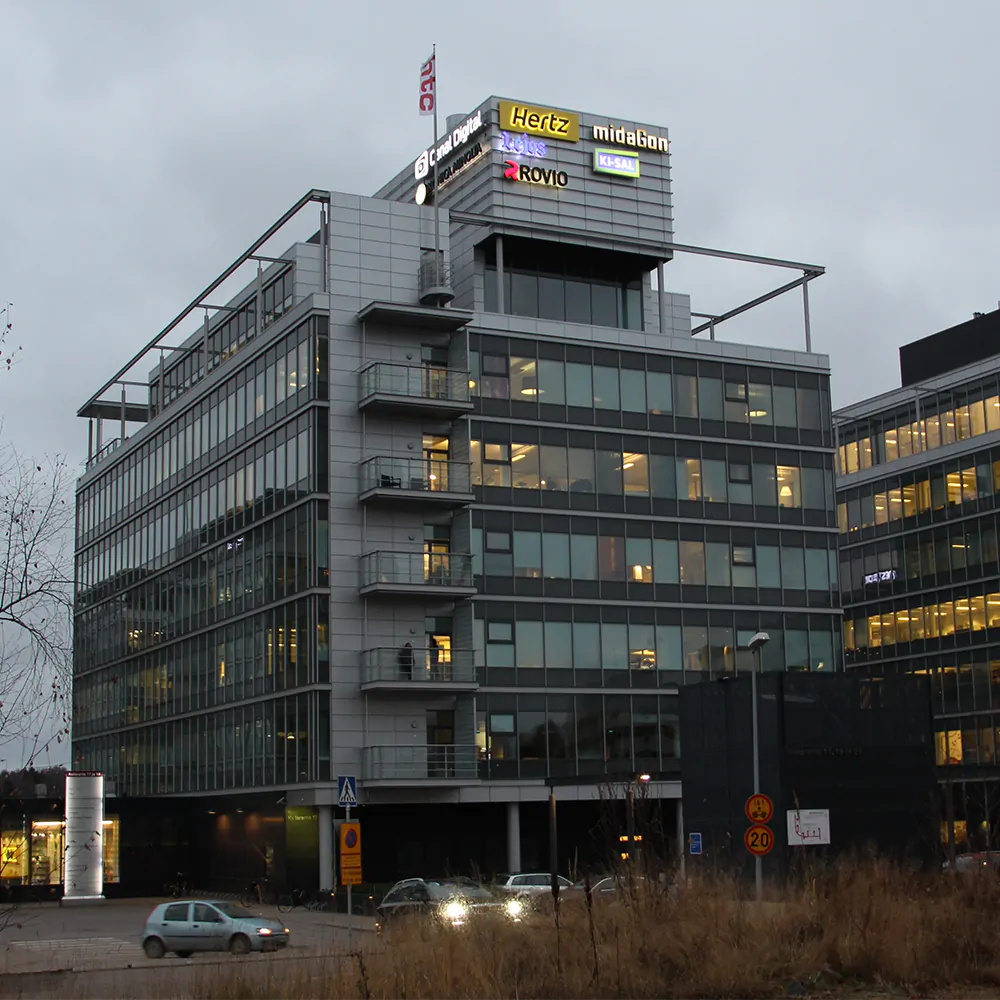
The road here has since been redesigned but back in 2013, it was essentially a T-junction. One arm of the T went north, towards the university while the other arm went south, towards the Rovio and Nokia offices. I turned right, heading north. As I walked past a few trees, I was startled by someone yelling at me from across the street. I saw this woman, much closer, now yelling at me. She asked if I was following her. I told her that I was not, although from her point of view, I was. She asked me where I was going, and I explained that I was walking back to the university from the 6 PM mass. Somewhere in the middle of this, I assume she realized what was actually happening – we had started from the same place, around the same time and were walking to the same destination. Helsinki’s geography meant that we walked the exact same path.
I did not realize at the time, but a couple of my friends later pointed out that she had likely called the cops, who were waiting nearby. This woman never did anything suspicious, at least to me, but she eventually crossed the street, I apologized and she and I started walking back to the university campus together. There was a likely signal amongst all this, that the cops interpreted as everything being ok. I have no idea what it was.
During our walk back, I apologized several times. The woman (I will not name her) said that she accepted my apology but was nevertheless scared. She then added an important piece of context – the 2012 Nirbhaya gang rape in Delhi. This was the brutal gang rape of a 22 year old physiotherapy intern, on a moving bus, by a group of men. Jyoti Singh was raped and then left to die on the side of a Delhi road. Women being raped in India is very likely something that happens every minute but this incident generated a lot of outrage because it hit too close to home for India’s wealthy and rich. One of us was the victim and we had to do something. This led to large protests, in Delhi and across India. Protests so large that the cops used force to disperse the crowds. Jyoti Singh eventually died but the whole situation received worldwide media attention, cementing India’s reputation as not just a lawless country, but an especially dangerous one for women. This was extensively covered across European media, and, understandably, scared a lot of women. Given that the Nirbhaya story was fresh in the media, the woman in Helsinki was understandably scared. I assume she worked out that I was not a threat, just a clueless man who happened to be walking behind her.
In hindsight, I do not blame myself because I was naive. I do accept that a man walking behind a woman for over an hour on a deserted street (even in broad daylight) is a terrible idea. I am not, nor was I ever, a rapist but a random woman cannot verify that. Life for women everywhere is scary, even in the West. I cannot fully appreciate the mental burden of constantly having to worry about your safety. My safety is just something I take for granted. My baseline is India and compared to India, women in the West are safer. Safer, but not totally safe.
I dread flights to India. This has been my opinion for as long as I can remember, including when my family lived in the Arabian Gulf. Every summer, we would visit India for about one month. At the start, I always counted down the days till we left, mostly because I hated life in Bombay. The flights, though, I loved. They were short, typically three hours, and I enjoyed the airline food. Once I started travelling alone, I learned to dread long flights to India.
Last week, I made a last-minute trip to the motherland for certain unavoidable reasons. Many parts of this trip annoyed me. Like always, I planned this trip via le Moyen-Orient, entirely so I minimize the amount of time I spend on a flight full of Indians. Four hours is about my limit on flights to India. You are free to label me a racist, but the things I’ve seen on direct flights to India would make you a racist as well. I’ve seen food trays in the toilet bowl, puddles of water on toilet floors, Indian adults emptying cups of water on the cabin floor, Indian men drinking too much and then groping the cabin crew, Arab police called to detain unruly passengers, and these are just the memorable ones. I also remember burps, farting, seat kicking, questions about my salary, people trying to steal my seat and so on. Travelling with large groups of Indians is just something to be avoided.
Flights via le Moyen-Orient involve transit via one of the Arab states. This time, I flew Qatar airways. Qatar is not a bad airline but it tries to be Emirates and fails. Emirates is the Dubai-based, state owned airline that led the development of the Middle East as a transit hub and they do sell a good product. Emirates planes are modern and clean. Dubai airport is large, but reasonably efficient. Doha airport and Qatar Airlines are none of these things. They are definitely not as bad as Air India, but more like a dollar store version of Emirates. Anyhow, transit via Doha was annoying, but ok. The annoyances are the long walk from your plane to security, around 400 meters. This is ok for the able bodied but is annoyingly long. During both transits at Doha, I passed only two toilets and there are no moving walkways. Security is fine, but annoying. The Qataris really emphasize that they have tamed the desert by shoving a tropical forest in the middle of the airport. Money and western technology were the real tamers of the Qatari desert.
Post the Doha stopover, I arrived in the motherland, where my annoyance levels grew exponentially. Your first experience with Indian inefficiency is the carpet as soon as you exit your plane at Terminal 2 at Bombay. This carpet is old, obviously dirty, and has holes in places. I don’t know whether it is cleaned regularly. You then have to walk about 300 meters to the immigration counters but the journey there shows you just how broken India really is. There are moving walkways, but they alternate sides. In other words, you first shuffle to the left to use one, but as you exit, you then shuffle to the right for the next. Repeat about three times, despite there being two rows of the damned things. Why they are used this way can only be explained by ancient Vedic knowledge, which has obviously been lost in the slums outside the airport.
Then is immigration, where I generally speak only if spoken to. The lines are slow, the tech regularly breaks down and the “officers” are often rude and uncouth. Not the best introduction to a country trying to grow its tourism sector. Let’s go on a minor detour here, shall we?
While waiting in a glacial line at Indian immigration, you might decide to connect to the airport wifi. This is a completely normal thing at any civilized airport. In the great nation of Bharat, it is not. Connecting to the wifi at most Indian airports requires a one-time password, the beloved OTP in Bharat. But wait, you can only receive this OTP via an Indian cellphone number, which requires an Indian SIM card, which most international travellers do not have! Ah, a Catch-22. What to do? Not to worry, the Indian bureaucracy has a solution! You queue up in front of a pair of machines, of which only one is working. You scan your passport and boarding card and the machine might spit out an OTP for you to use on the WiFi! This is on a good day. On a normal day, there is a line of 200 people, both machines are broken and you decide to just not use the wifi anyway.
Immigration is often a pain in Bharat, for numerous bureaucratic reasons. You are forced to fill in a form that includes questions such as where you plan to stay, your local contact number and so on. How will a tourist have a local contact number? The answer does not matter, for the Indian bureaucrat wants it anyway. To do what, no one knows. Remember, the Indian bureaucracy is like a black hole, a relentless sink and shredder of information, so much so that information triplication is the norm in Bharat. This “arrival card” includes information already in your passport, but must be hand written for reasons unknown. The immigration “officer” will scan your passport anyway, so what is the point of this card?
Once you are past this, you then arrive at customs. This is where a bunch of power-tripping bureaucrats (sometimes scammers) dressed in white can ask you random questions, demand bribes and generally harass you. India is one of those countries where the lowest, most unimportant bureaucrat, has tremendous nuisance value. Customs is the prime example of that, because this time, Ramesh at the scanner could not understand why I arrived from Doha without alcohol. He would not accept my answer that alcohol does not interest me. Instead, he forcibly scanned my bags, found zero alcohol and then repeated the original question. After two rounds of this, he let me go.
Outside, I needed a taxi. Taxis need payment and payment in India needs either cash or that UPI system. The trouble with the UPI system is that you need an Indian phone number, which I did not have. Cash was the alternative. The trouble with cash is that, generally, you cannot buy Rupee notes outside India. If you have literally zero rupees, there are no bank ATMs at Mumbai airport so you are forced to accept extortion-level rates from the currency exchanges at the airport. Ah, welcome to Bharat, where every transaction requires detailed knowledge and without that knowledge, you will be cheated, conned and extorted. Such an amazing country!
I then followed the signs to P4 (unsure what the P stands for), as that was where the prepaid taxis are. Prepaid taxis are great because you tell a person at a counter where you’re going, they determine the cost, you pay and are assigned a taxi. No haggling, no hassle. This is one of the few things that works at Bombay airport… is what I would have said if the counter was easy to find. It is not. As soon as you exit the lift at P4, you are presented with a “Taxi and tour” counter. Brightly lit, this must be the correct spot? It is not. This is yet another example of extortion where the semi-literate fools at this counter will listen to your destination, type out a number on a comically large calculator, and present this to you as a fair fare. I am not new to these schemes so when I heard ₹ 1,200, I told the man to nibble on my gotas and walked away. I found a black and yellow taxi and asked where the payment counter was. It ended up being behind a pillar, not visible from the lift and dimly lit. I paid ₹ 590 for a taxi, which is completely fair.
This was just on my journey out of the airport, and I was harassed or misled four times already. One by the wifi, once at customs, once by the cash, and finally by the taxi stand. Welcome to Bharat, please do your best to enjoy the harassment, pollution and filth.
Yet another planning disaster is the supposed “modern” metro. There is a metro station at the Bombay airport, provided you expand the definition of “at” to include a station 300 meters away. I tried to use the metro station but you have to walk outside on a broken road, carry your bags down a flight of stairs and trudge through 400 meters of tropical humidity to reach a train. If your destination is in the western suburbs of Mumbai, you have to change metro lines and the geniuses who designed the metro lines assigned some lines to separate companies, meaning there is no direct transfer between stations. You must exit one line, deal with the chaos of a Mumbai road, buy a new ticket, traverse the farce of “security”, and then be told that large bags are not allowed on the metro. Is the expectation that people using the airport will arrive with zero bags? Here is the reason why ridership on the airport metro line is at 11% of projections.
Bombay is one of those cities where you wear an N95 mask outdoors, so you do not inhale pollution equivalent to smoking dozens of cigarettes. I decided that we needed an air filter at home. Ok, I went to a shop to buy one. I found a model I was willing to buy, held the cash in hand, and waited at the payment counter. The lady there asked me for my phone number. I said that I had no phone. She did not know what to do and called someone for help. She then asked for my address, and I didn’t want to share that. I declined the warranty and again, she didn’t know what to do. A different person was summoned. Next, she could not find the air filter in the store’s computerized system. A third person was summoned and she asked me to wait. At this point, I’d been waiting there for fifteen minutes, cash in hand, ready to pay. All I wanted to do was to buy something, and Bharat’s digital systems had failed it yet again. No rational shop, anywhere in the world, would do this to a paying customer. I walked away.
I then went to a shop owned by the great Gujarati businessman, the illustrious, well-proportioned, well-heeled, politically connected Mukess. At the entrance, there’s an excellent theatre where you can participate in the great Indian security pantomime. A man will grope and finger you, all in the name of preventing “terrorism”, never mind the fact that muslims are lynched in India on the daily. An actual terrorist would just walk through the back door, which is helpfully wide open and completely unguarded. So unguarded, in fact, that I accidentally wandered out of it, not realizing what the door was. If you need a cellphone, welcome to the world of “Aadhar”, a bureaucratically and legally optional document, but one that the real world deems mandatory. Without an Aadhar number, no cell phone for you. No gas connection, no bank account, no digital payments. Completely optional, if your chosen lifestyle includes foraging in a forest and sleeping outdoors with no electricity. Nandan, I hope your personal afterlife includes eternal Bangalore traffic, no chutney on your idlis, and endless paper cuts from an Aadhaar card.
Leaving the great nation of Bharat is another shining example of just how many Indians are unemployed or underemployed. At the airport departures level, you first show your passport and ticket to a pair of armed men in military fatigues outside the airport. You then repeat the process at the airline check-in counter. Next, the security people check your passport again and stamp the back of your boarding card. Immigration then repeats the stamping and if, Vishnu forbid it, you lose your boarding card, you must traverse this entire charade yet again. Next, the airline staff at the gate check your boarding pass, another person scans it, and you are then accosted by a random person on the air bridge who demands to see your passport yet again. Six people, six duplicated “checks”, all in the name of “security”. I have personally never witnessed any benefits to this level of bureaucratic nonsense, nor am I aware of the benefits. I’m sure the esteemed Indian bureaucrats will sing the praises of such a well-oiled system, but it really shows you how many people in India do not have gainful employment. In the airport toilets is a person to greet you and generally maintain “cleanliness”. I will concede that hygiene standards at the airport toilets has improved somewhat. The toilets are now useable. Yet another person underemployed. Indian public toilets need regular cleaning and civic education, not gatekeepers.
Praise be to Vishnu, Jesus and Allah, for the small wins. In the past, your cabin baggage included a tag that was stamped by airport security. Without that stamp, what evidence did you have of not carrying contraband or illegal aliens in your 7 kg of cabin baggage? Thankfully, that stamping has now ceased.
This is the real experience of Bharat. Inefficient, pointless, duplicative, wasteful, manipulative, tiring. Unemployment is a problem but the solution is more bureaucratic inefficiency, doing everything in triplicate, for no reason other than creating busy work and under-employing the unemployed and unemployable. Just walk into a police station in India or a government office and you will see stacks of papers, floor to ceiling, that no one looks at, just sitting there so someone can tick a box, harass the average citizen and collect bribes.
Canada, like anything in real life, is complicated. There are things I like, things I tolerate, things I enjoy, and things I despise.
Warning – Coarse language.
Vehicle obesity
I am not a person driven to extreme opinions and I am often willing to meet people where they are. On one subject in particular, I am an extremist, a missionary, a jihadi, even. That is auto obesity.
The top ten best-selling vehicles in Canada in 2024 were pickup trucks and SUVs. These are vehicles that are needlessly large, impractical, inefficient, but immensely profitable for the American automakers. I tend to view most US residents as gullible, low information yokels, but the capitalists who run the United States are the literal exact opposite. Opposite to the point of evil, and the auto industry is the perfect example. Look under the hood of one of these monstrosities and you will find plenty of empty space. Space that does literally nothing. The US automakers spent billions of dollars in market research and lobbying efforts to make this nonsense legal. Empty space so cars can look more aggressive, manly, and, intimidating. The space inside cars means that the occupants are safer, and motor vehicle mortality data shows this clearly. However, that comes at the expense of people outside these fucking SUVs and “light” trucks.
This is so bad, that Canada is one of only seven countries to see an increase in pedestrian fatalities. One among the others is the United States. The CBC found that some of the most aggressive drivers tend to drive more expensive cars, lending credence to the belief that these drivers are assholes. The #1 selling vehicle in Canada is the Ford F-series pickup truck, ostensibly used by the hard-working, rural Canadians who work in the trades and regularly use the four-wheel drive system to negotiate unploughed snowy roads. Fuck no. These suburban assault vehicles are driven by Brad and Becky, mostly on grocery runs and while carting their progeny to and from “sports”. US data from Edward’s shows that three quarters of US pickup truck drivers tow something once a year or never. More bluntly, these vehicles are almost never used for their purported purpose. That is about as absurd as seeing Justin Trudeau walking around 24/7 in ski gear because he loves skiing. These vehicles are idiotic devices, sold to gullible consumers, all with the goal of signalling virtue. The size of your pickup determines how much of a man you are. The spacers you put on the wheels signal to women that you have a long penis, of great girth. Funny, how the lack of pickup trucks in India and China does not affect their reproductive abilities. This obsession with size and “practicality” is so pervasive that I’ve seen Punjabi and Tamil Canadians driving around in these monstrosities. Brampton and Scarborough have black pickups with AK decals on the back. Some even have the flag of the LTTE. It is absolutely wild seeing Diljeet and Thushaan joining this ass-backwards trend.
If you are a politician reading this and can promise me that you will mandate commercial licenses for any vehicle with a height over 2 meters, I will vote for you. I will even allow you a little racism and homophobia if you reduce the number of pedestrian deaths, especially via cunts like this man, who killed the mother of an infant with his morbidly obese pickup truck.
Road signs
Canadian roads have signs, just like any civilized country. Canadian roads, though, swing between extremes. On one end, you have places like Toronto and Montreal, where you need advanced degrees in mathematics to determine whether or not parking is legal at a certain time. On the other, you have long stretches of rural highways with scant signage, sometimes to the point where the cops exploit that fact to issue fines. Some of these signs are at head height, around 1.5 meters above ground level. I often wonder how many people have smacked their heads into the signs or have been left bleeding after colliding with them edge-on.
The nature
People from around the world come to Canada to experience the great outdoors. And great they are. The provinces and the federal government operate a world-class system of parks and nature reserves. I highly recommend visiting them because they truly are a sight to behold. The pride extends deep and I’ve seen brown immigrants picking up random bits of trash so as not to spoil the experience for the next person. Around 22 million people visited the federal parks in 2023 and around 12 million visited the Ontario parks system in 2024. These parks are popular. So popular that the camping and parking reservation websites are regularly swamped.
In Spring 2025, I bought an electric car. The clutch in my old Ford Focus was on the verge of disintegration. The Americans, clever as always, stopped manufacturing “small” cars and now focus exclusively on suburban assault vehicles like SUVs and pickup trucks, driven by suburban owners of assault rifles and connoisseurs of freedom. A Marxo-socio-communist like me has no option other than to buy a bulbous “crossover” vehicle. These vehicles combine the impracticality of SUVs with the small footprint of a sedan car, producing a true combination of the worst of both worlds. Ah, the American auto industry, truly the most intelligent people on the planet.
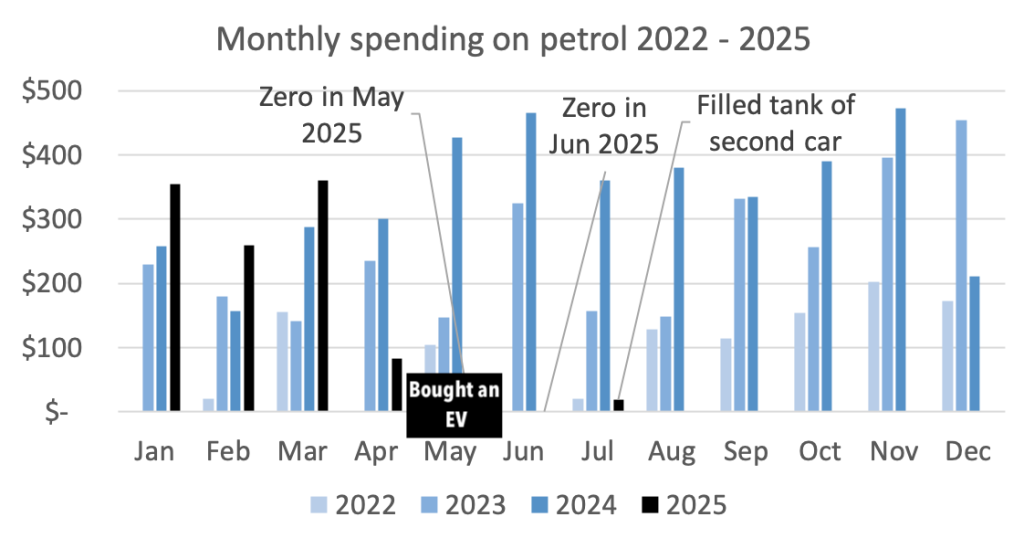
Anyhow, I now drive a 2022 Hyundai Kona EV. It is very cheap to operate and has slashed our petrol spending by 88%. It has buttons, knobs, glass mirrors and is for all practical purposes, just a normal car. I repeat, it is just a car that you drive. There are, however, several niggles that I do not like.
One obvious difference is in the weight of the car. My old Ford focus weighed around one tonne. This Kona weighs around 2.2 tonnes. The difference in inertia is instantly obvious when braking. The EV takes longer to slow down and the brakes are very aggressive. Something to be aware of, but something that familiarity will fix.
I like to watch the heads of my passengers as I drive. The forward and backward movement of their heads is a reliable indicator of how much acceleration is happening and I like to minimize acceleration. This means changing speed slowly and consistently. In a combustion car, if you accelerate to highway speeds and then idle the engine, friction makes the car decelerate, but slowly. You can bring the car to a complete stop from 120 km/h in about 200 meters. This is safe and comfortable. In our Hyundai, if you stop accelerating, the car starts braking. This is the action of the regenerative brakes and I appreciate their ability to capture wasted energy. Comfortable, however, they are not. Traffic speed constantly changes and sometimes, you want to stop accelerating but not start braking. You want to coast. That is not easy to achieve in a Hyundai EV. Yes, you can disable the auto regen braking but it has an annoying tendency of turning itself back on. This means that your passengers are quite uncomfortable after a while of constantly swapping between braking and accelerating.
On the plus side, Hyundai’s adaptive cruise control is very adept at varying engine power to reduce speed and maintain a safe distance to the vehicle ahead. Varying engine power via the accelerator pedal is not as easy.
On the negative side, cruise control also enables lane detection, which, isn’t always the best. I learned to drive in the Netherlands where skidding on wet and icy roads is a risk. You learn how to drive using a racing line, not for speed, but for safety. Put simply, your car’s tires have finite grip. Changing speed or direction uses grip. In slippery or wet conditions, your aim is to keep the car moving as straight as possible, while also planning for the worst. The racing line starts on the outside curve of a lane, moves to the inside apex and then returns to the outside. You never drive beyond the lane limit. If there is ice, it tends to accumulate on the inside of a banked turn. If your car is already pointing where you want it to go, losing grip on the inside of a turn is less dangerous, you just keep moving ahead safely. Hyundai’s lane assist system will not allow this. It keeps beeping and bonging that the car is too close to the lane edge. Oh and many exits on Ontario highways do not have marked exit lanes. Instead, the right lane becomes wider, with one side becoming the exit ramp. My car keeps trying to force me to exit. You cannot disable lane assist in my car and there is no speed-only mode for the cruise control. Both are linked.
Hyundai’s “crossover” design for the Kona means that the car is higher than it should be, and so is the hood of the car. In that additional height, is a great big void so the additional height is purely for cosmetic reasons. My strong preference is to not drive into pedestrians, especially children. To maximise front visibility, I use a booster seat. My head now touches the roof of the car and I cannot adjust the rear view mirror at this height. Obviously, this is also a problem if you are tall.
Hyundai’s software for the car includes scheduled charging, allowing you to minimize your charging costs. This works well. What does not work well is Hyundai’s scheduled departure feature, which is supposed to heat or cool the cabin in anticipation of a fixed departure time. Bizarrely, the scheduled heating/cooling only works if the car is still charging when the departure time arrives. This means that if you depart at 07:00 in the morning and your car just happens to finish charging at 03:00, the departure time is meaningless because the heating/cooling will not run.
The car includes a liquid cooled battery but there is no way to turn on battery preconditioning. If you are on a road trip, you want the battery temperature to be around 20 C for peak charging speeds, which are already low on a budget car. There is no way to do this. A software update should fix it, but alas. Hyundai appear to be infected by American capitalism.
The car’s software is also full of beeps and bongs. So many that they are actively irritating and occasionally a safety hazard. Sometimes, the cruise control disengages. That’s a bong. If you use your turn signal in anticipation of a turn and there happens to be a car next to you, that’s a series of beeps. If the outdoor temperature drops to zero Celsius, that’s a bong. If the car ahead of you turns onto a side road, the car’s collision avoidance system thinks that a collision is imminent. That’s a series of bongs. Sometimes, if you brake too hard, the car chides you for dangerous driving. That’s a bong. This is a cultural thing and is evident on other Korean-designed devices like Samsung’s phones, also full of beeps and bongs. I have to try very hard to not train myself to ignore these sounds.
To be clear, I love an electric car. It does take some getting used to but, nothing time cannot fix. Hyundai have some cultural quirks and some capitalist quirks but give the state of the car market in 2025, I can live with those. I highly recommend the Hyundai Kona, especially if you can find one used.
If you live in Ontario, Canada, the electricity regulator – the Ontario Energy Board – sets
your electricity rates and plans
. Electricity rates are based on two factors – how much electricity you use, and/or when you use it.
Each electricity plan offers different options for both factors. You have three options in 2025 – tiered rates,
time-of-use rates and the newest option – the Ultra-low overnight rate (ULO). The ULO rate could be cheapest
if you own an electric vehicle and drive a lot. The exact EV usage amount when the ULO rate is cheapest depends
on how much you drive and your charging requirements, i.e. when you need to charge your car. Most of my charging
is overnight and the ULO rate offers a significantly cheaper option for this period. However, the ULO rates include
periods during the evening when electricity rates are higher.
What this page does:
Use this page to estimate the cheapest electricity billing option for you. You must
provide at least one week of electricity usage data in a CSV file. The calculations below
use your hourly energy usage to calculate two typical days of electricity usage – a weekday
and a weekend day.
In my case, I own an EV and am trying to determine whether the ULO plan is the cheapest
option.
⚠️ Important:
The input file is NOT the Green Button format. Please use a CSV file.
⚠️ Privacy Notice:
All calculations are carried out on your computer. No data is sent either to me or to
anyone else. This page uses CSS from UNPKG.com.
The chart uses the Chart.js library. If you do not recognise these words, don’t worry.
No data leaves your computer and you can use this script entirely offline.
I created this page using AI (MS Copilot). I verified that the calculations for the
Tiered rates are correct for summer and winter. I did not verify the calculations for
TOU and ULO rates but the cost estimates do appear plausible.
Instructions:
Visit your electricity utility’s website and download your usage data as a
CSV file. Make sure to download at least seven days of data. Save this somewhere on your computer.
Below, click “Browse…” and find the energy usage CSV file on your computer.
Click “Calculate”.
The chart below will update and show your average energy usage for a typical
weekday and for a typical weekend day. Note that both lines in the chart represent one day each.
Select the season – either winter or summer rates.
Select your pricing model and click “Calculate Cost”.
I designed these calculations for Ontario’s electricity rates. The CSV file you download from your utility should start like this:
Date
Hour 1
Hour 2
Hour 3
2025-09-01
0.42
0.38
0.45
2025-09-02
0.40
0.36
0.43
⚠️ Not working yet:
The sliders for hourly energy consumption do not work. The values at the moment are from
your electricity usage file. The eventual idea is that you can modify these values to see how
your electricity bill changes. For example, these should allow you to answer questions like
“What if I charged my car starting at 11 PM instead of 7 PM”. At the moment, these sliders do nothing.
During the COVID-19 pandemic, I had my first taste of working from home. I did work remotely in the past, but this was my first sustained stretch working from home. I realized a couple of things very quickly. One, that paying for a quality chair is a good idea. Two, that paying for a quality sit-stand desk is a similarly good idea. Finally, that if you are not physically in front of people, having a quality image of your face on their screens is an excellent idea.
I’m old enough to remember film cameras. I vaguely remember my parents owning disposable point-and-shoot cameras as well as a couple of cheap Nikon film cameras that eventually broke. I don’t actually remember much about the cameras themselves but I was intrigued by the batteries. I do not remember the exact model but they were definitely not AA or AAA batteries. They were something different. I also remember the photos after they returned from the studio – soft focus, often washed out colours, grainy. At the time, that was the best we had so I just accepted it.
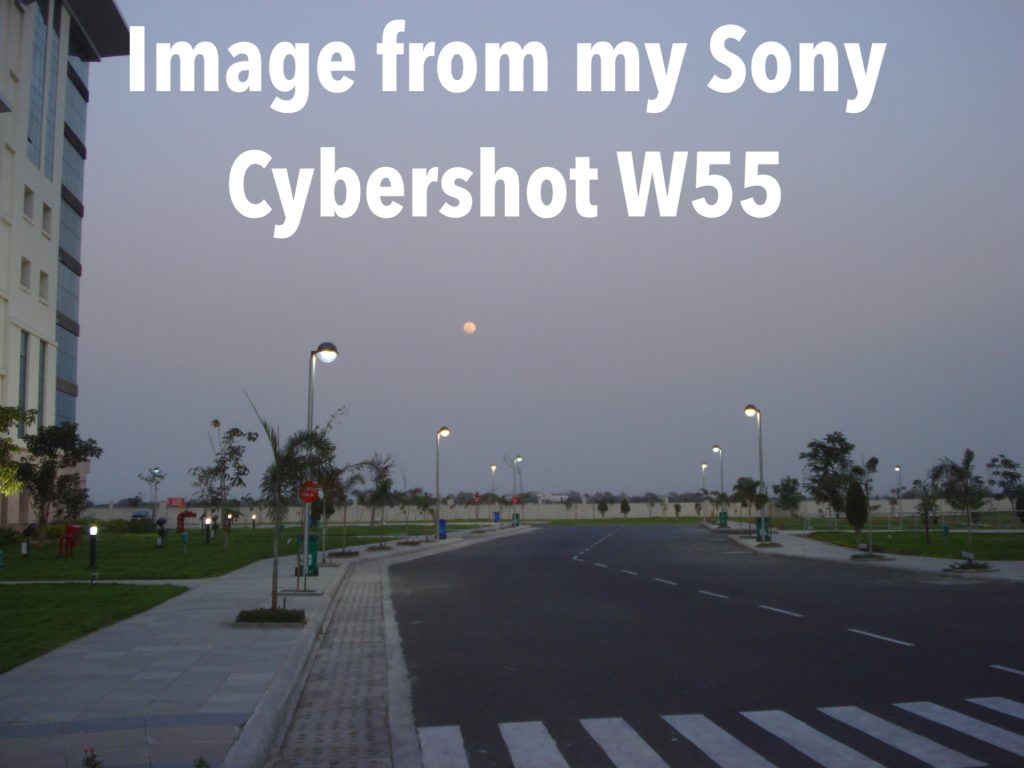
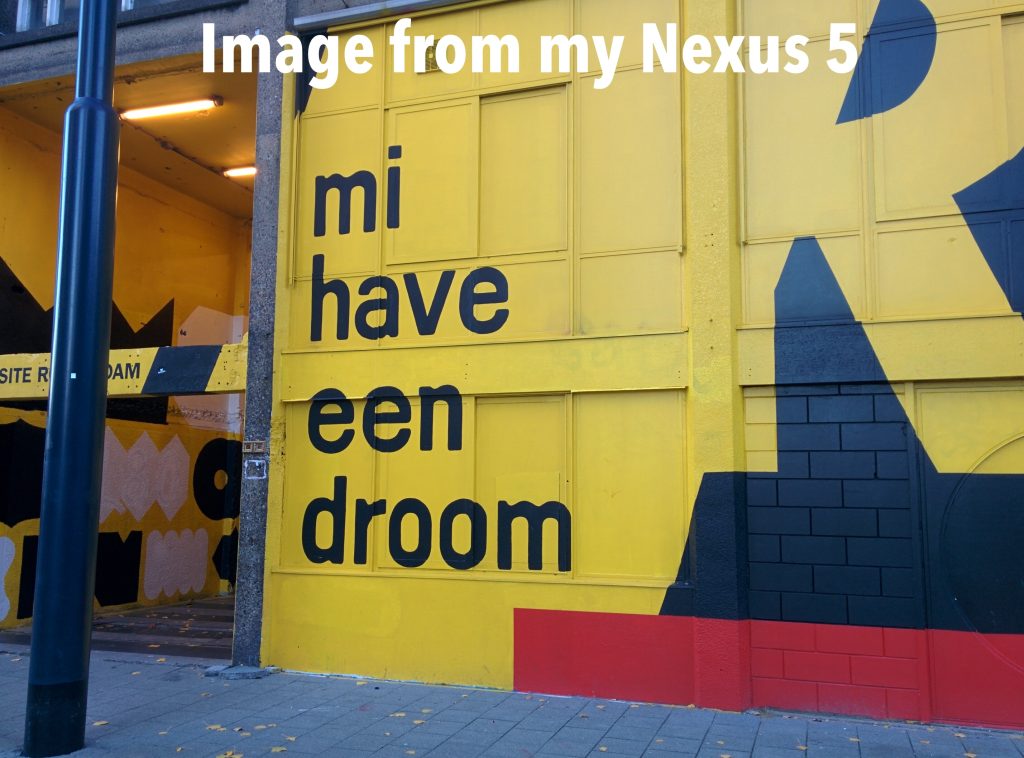
Eventually, my dad bought a Sony Cybershot DSC W-55 digital camera. This was the mid 2000s and was during the brief interval in my life when I didn’t read product manuals. I had no idea this was a mirrorless camera. I also had no idea what W and T meant on the zoom rocker. In my defence, zoom in and zoom out make more sense. W and T stand for Wide and Telephoto respectively, but the average person will not make that connection. Anyhow, the camera manual did describe this, as I recently discovered in the year of our Brahma 2025. I would set the camera to auto and hope for the best. It survived Mumbai’s trains, Rajamundhry, Baroda, Helsinki, Stockholm and finally Utrecht. Often, this camera did a pretty good job. I kept this camera between 2007ish and 2014, when the battery died. It was a pretty good camera, certainly producing better photos than any phone camera I had at the time. My phones were cheap Nokia models and eventually, a Nexus 5. I just abandoned the camera one day, deciding that I was better served with my phone.
That changed. And how. During the pandemic, I realized that the tiny webcam in my laptop produced horrible quality video. I also realized that the lack of focus meant that too much of the scene behind me was in focus and that the webcam software made me look white. In fairness, pardon the pun, I would love to navigate the world as a white man, but I am not a white man so a camera making me look whiter than I am is insulting. This led me to buy a cheap webcam – a 1080p Logitech model that was incredibly popular during the pandemic, when everyone realized that laptop webcams are terrible.
There is a reason I studied engineering and that reason soon came to the fore. I had to know WHY my laptop camera was so bad, WHY the webcam was better but not better than the streaming setup of some Twitch streamers. I also had to know what a DSLR was and how I could achieve that beautiful background blur on my video calls. I started reading camera manuals and soon discovered the reason I started but stopped reading the manual of my first Sony camera – these manuals assume that you already know the jargon of photography. If you are reading this, do you know what an f-stop is, what aperture is and what focal length is? Do you know how each of these interact with ISO and exposure length to produce a certain image? I did not and even now, I barely understand these terms. I have read extensively about them and I do know a few things but I am far from an expert. Camera manuals were written for experts.
The answer to why certain cameras are better than others boils down to physics – the physical area of the image sensor. A real camera has an image sensor around an order of magnitude (10X) larger than a typical phone camera. Similarly, a phone camera’s sensor is larger than the webcam sensor, which in turn is larger than your laptop’s camera. That’s it. Phone cameras do try to compensate for smaller sensors with software trickery, a process called computational photography. There remain, however, laws of physics that cannot be broken hence why a picture taken on a phone looks nice on the tiny phone screen but as soon as you print it out, it looks terrible.
This motivated me to invest in a real camera and to repurpose it as a webcam. The Indian in me scoffed at spending thousands of dollars on buying a new camera so off to the used market it was, specifically, Facebook marketplace.
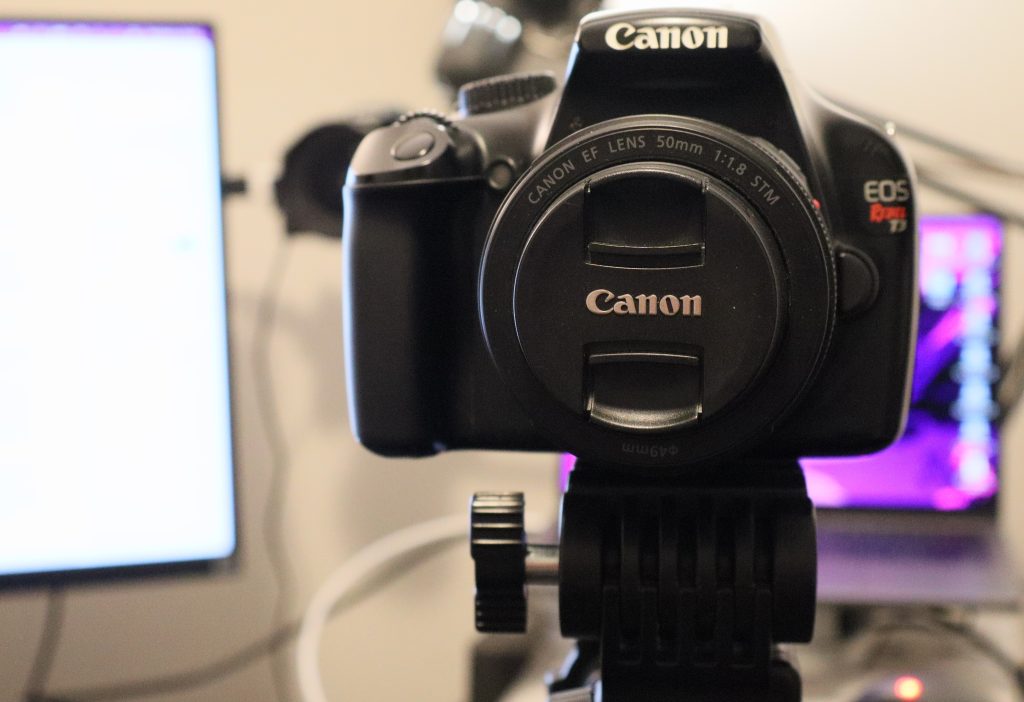
I did my R&D and discovered that something called “clean HDMI output” was desirable so I bought the cheapest Canon camera I could find that provided clean output, a Canon T3 from 2011. I bought this in 2021 so, at ten years old, it was already obsolete. This camera came with the kit lens, a term used for the cheap lenses that manufacturers bundle with the camera body. It also came with multiple batteries and chargers, neither of which I needed. I needed a way to get video from the camera into my computer. At the time, Canon provided free software called EOS Connect that used the USB port on the camera to stream 720p video from the camera. This was already much better than my tiny Logitech webcam and I was thrilled.
Soon, however, a new problem emerged – my audio came from an external mic, not from the camera. The dated processor on my camera meant that the video and audio were out of sync. Worse, this was not an easy problem to fix in Zoom or Microsoft Teams. What to do?
I decided that the solution was a USB capture card. Essentially a device that took the HDMI video from the camera and streamed that to my computer, without Canon’s Japanese trickery in between. This worked well until I realized that I did not want people seeing my Shinkansen model trains behind me, lest those same people think that I was a transit-loving Socialist (I am).
I went on the inter webs and to YouTube this time. Dear reader, YouTube is not a reliable source of information at the best of times, and relying on it for nuanced technical information is a bad idea. I surmised from several videos that I needed a better lens and a lens that let in more light would make me look like a video game streamer on my video calls. So I bought a lens with a focal length of 50 mm and a wide aperture that let in a lot of light. I plugged that into my camera, placed at arms length in front of my face… and realized that I now had a very high quality image of my nose with a blurry background. You could choose between seeing one of my eyes or my nose or my misaligned front teeth. The knowledgeable among you already know the problem – the higher the number attached to the focal length, the more zoomed in the image is. This was my first mistake.
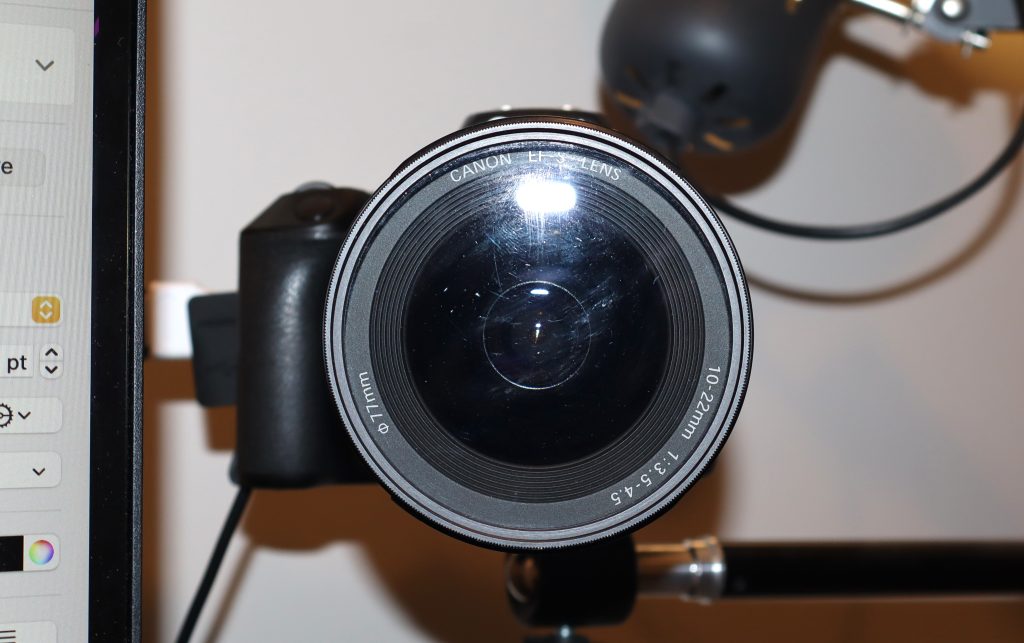
No matter, back to the inter webs I went and discovered that I needed a lens with a smaller focal length, ideally around 18 mm. At this time, I finally decided that I needed a better camera, ideally with autofocus in video mode, so I went back to Facebook bazaar and found a Canon SL3 for $ 400. This is a 2019 model and among the last DSLRs that Canon made. Found hundred Canadian dollarydoos was a lot of money for a webcam but I decided that if I was doing this, I would do it the right way. I then embarked on a quest to find an 18 mm lens and I eventually did find one, an older Canon zoom lens rated for 10 – 22 mm. Good enough for a webcam. This is the set up I still have and it works well. So well that I never move the camera or the capture card or the camera arm. It just sits there as I work. The only thing I do is switch the camera on or off as needed.
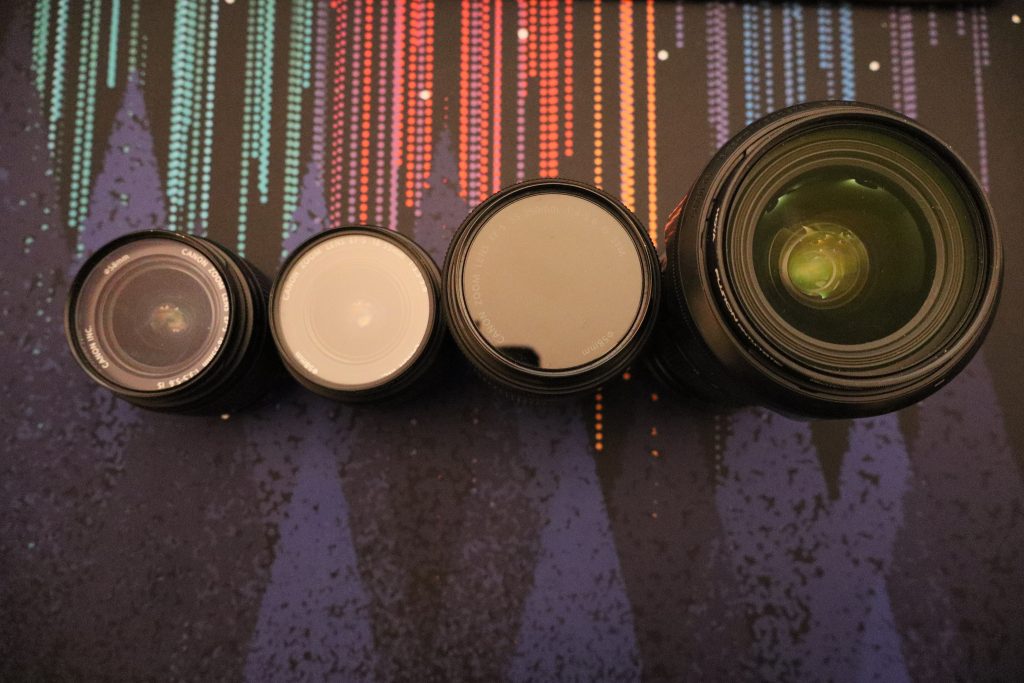
You likely noticed the list of equipment in the penultimate sentence there. Yes, I now owned a tripod, a camera arm, an HDMI capture card, two DSLR cameras, four lenses, a dummy battery for each camera. And this was only the start. Eventually, I decided that I liked photography combined with my hobby of fixing things so I bought a “broken” zoom lens, technically a telephoto lens but that word sounds esoteric. Like the word esoteric. The lens wasn’t actually broken, only one of the communication contacts was rusted. I cleaned the rust, cleaned the glass and I had a new lens. I used this to take pictures of birds and my mortal enemies – rats in trees, more commonly known as squirrels.
By this point, I decided that I liked taking pictures that would stand the test of time so I needed a travel camera. I scoured Facebook marktplaats for months, scoffing at the thousand-dollar price tags of used mirrorless cameras. Ah, the mirrorless craze. This meant that many amateur photographers, convinced that the mirror in their camera was the only thing standing in the way photographic greatness, were looking to sell their old camera gear. This is how I found amazing deals on my existing cameras and older Canon lenses. This time, though, I was in the market for a mirrorless camera myself and I was unwilling to pay the high prices they commanded. Eventually, I found a cheap Canon R100 for $ 450. It was small enough that I could carry it everywhere and that is exactly what I did. The internet will tell you that this is a cheap camera for a reason – Canon cut too many corners. No articulating screen, older processor, and so on. It doesn’t matter. It really doesn’t. I primarily set this camera to auto mode, let it do the maths and I just take photos. On Canon’s own website, this model is the #2 or #3 best selling camera.
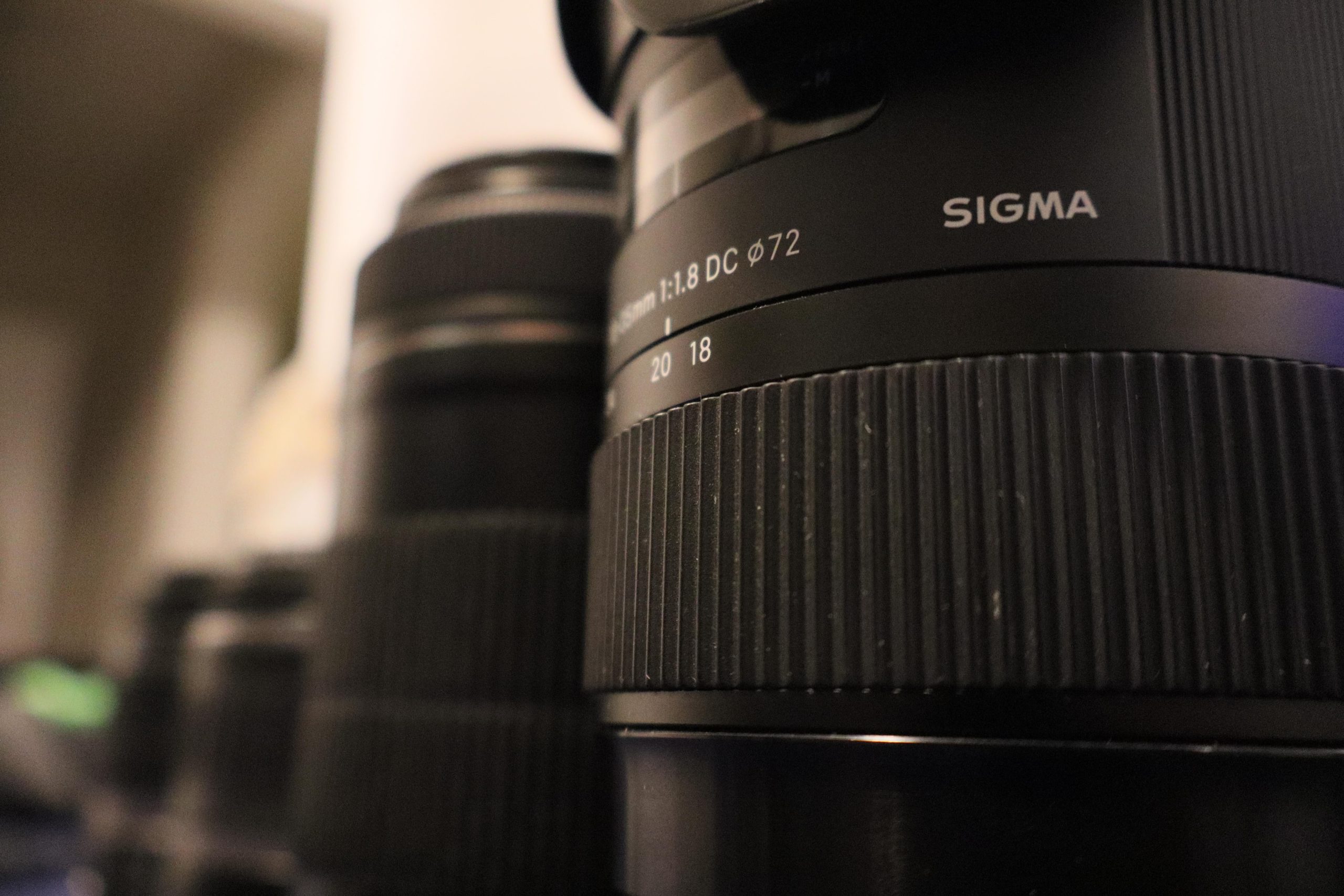
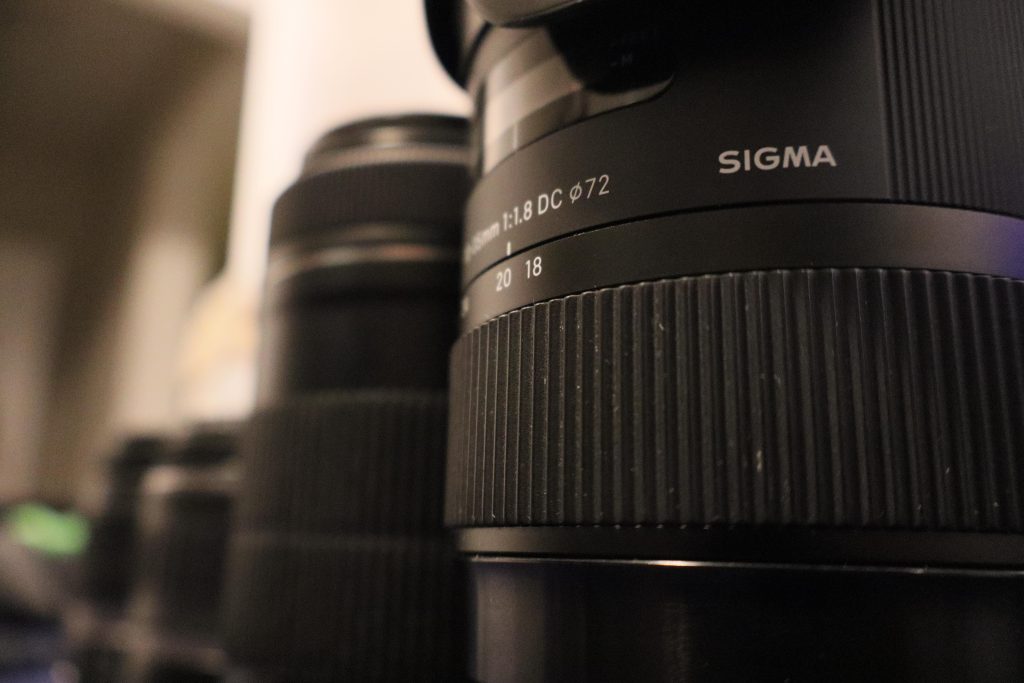
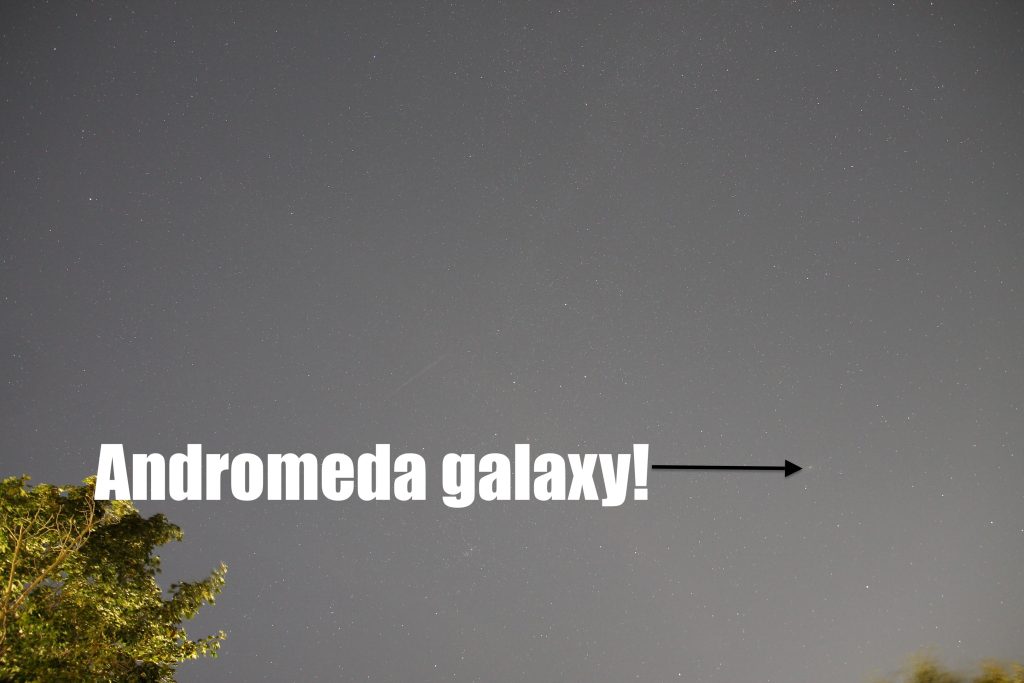
Later, I decided that I wanted to take pictures of the sky (the aurora and the milky way) so I needed a proper lens. “Proper” implies expensive and I eventually bought a Sigma lens for $ 500. The price tag when new was $ 1,300 Canadian dollarydoos. This remains the single most expensive piece of photography equipment I have purchased and I expect that record to hold for at least a few years. When I stood at the CIBC ATM withdrawing cash, I cried a little inside. This lens, however, produces some stunning images. A pity that I don’t know what I’m doing and so I rarely take any stunning images. Still, I can photograph the night sky and a lot of stars, and even the Andromeda galaxy! This brings me joy.
I will conclude with this – yes, your phone can take some pretty amazing images given its compact size. Yes, the best camera is the one you have with you in the moment. But, if you want images that you can print and frame as memories, ones that look like real moments, with real people, with imperfect faces, you should buy a real camera. I have many images saved over the years. When I recently printed a few, every single image from my various phones looked like rubbish. Why? Either the resolution was too low or the “computational photography” produced weird skin tones, strange patterns or just a blurry mess as the computer tried to guess what reality looked like. I don’t care if the Google or Apple engineers produced an AI model that guesses accurately. I don’t want a guess, I want reality. My skin isn’t perfect, neither are my teeth and my photography skills are far from good. But I don’t care. Auto mode is good enough, but it is only good enough on a real camera.
PS – the table shows the cost of every single piece of camera gear I’ve purchased over the past three years. It adds up to $ 2,095. I am certainly not happy with that amount but I must remind you – Canon will charge you double that for a single RF-mount lens. Not the camera, just the lens. Yes, a very good lens, but still, that’s over $ 4,000 for just one lens. All said, I found some amazing deals and am happy with my purchases. I encourage you to buy a real camera, but buy used. Let someone else take the hit on depreciation.
Canon T3 plus batteries, a camera bag and kit lens
$250
Camera tripod
$20
HDMI capture card (Elgato, 1080p)
$120
Camera arm (desktop)
$35
Canon EF-S 10-22 mm lens
$200
Canon SL3 with kit lens
$400
Canon 55-250mm EF-S zoom lens
$60
Canon EF 50 mm lens (f1.8)
$60
Canon R100 camera with kit lens
$450
Sigma Art lens 18-35 mm f1.8 with an EF-RF mount adaptor
I live in a part of the world with four distinct seasons. One season is winter and winter in Canada is cold. Winter in Ontario is often quite cold. Our house has two halves, one is the original brick structure with terrible insulation (non existent, actually) and the other is an extension built to standards of the 90s so it has some insulation. The extension has insulation but poor HVAC design – there are not enough supply and return lines for air.
The result of this is that my bedroom remains uncomfortably warm in the summer and is too cold in the winter. In 2024, the Feds ran a home retrofit program called Greener Homes and we participated. We received a generous amount of money to swap out our 30 year old furnace and 20 year old AC with a new furnace and a heat pump. This is a dual-fuel system, similar to a Toyota Prius, but without the limit on battery capacity. I can choose to heat my home with either electricity or methane depending on conditions.
This is certainly more efficient than our previous situation but the truly efficient solution is to properly insulate the house. I asked around and the cost was six figures. Not something we could afford easily and we were not keen on investing so much money into a seventy year old house. The solution was obvious – a more efficient heating system and so a dual-fuel system it was.
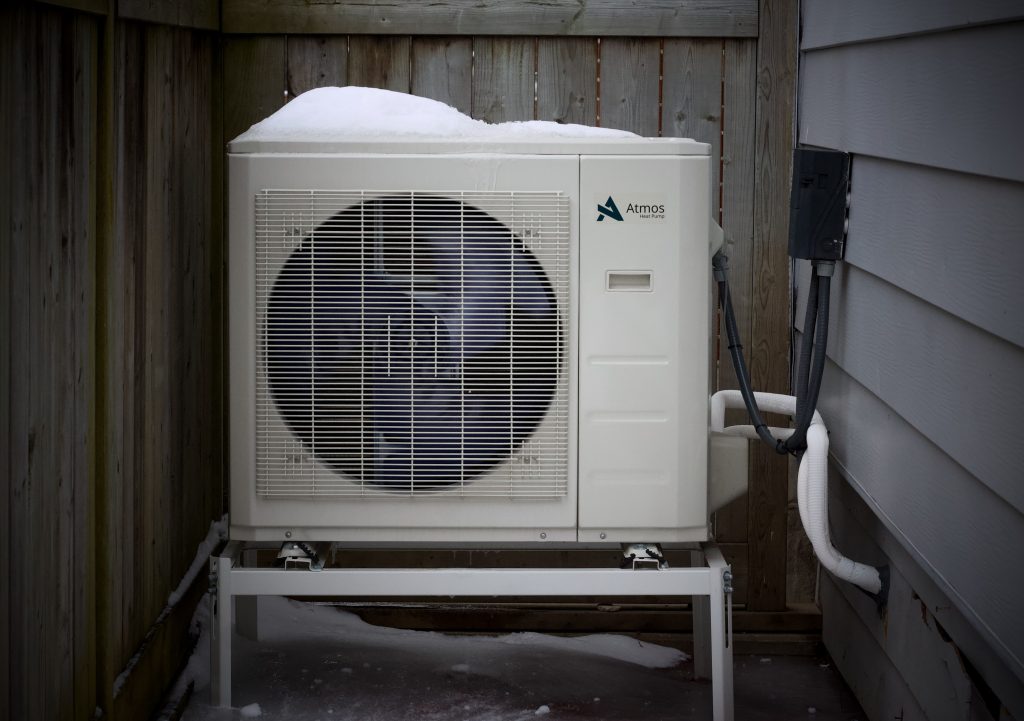
I did my research about which systems NRCan would accept and finally bought a 2.5 ton heat pump from Dettson, which is a rebadged Chinese unit. The internet suggests that Midea is the original brand. The furnace is a standard high-efficiency Trane furnace and we kept our smart thermostat. We run the heat pump in non-communicating mode so it has three operating levels – zero, 50% and 100%. The image at the top is our heat pump in the dead of winter. You can see weeks of ice accumulated under.
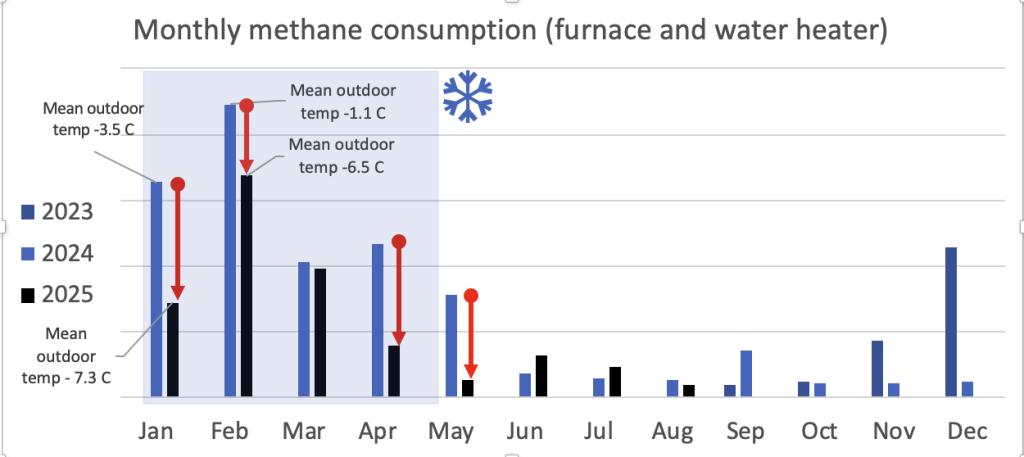
All information I had access to said that a heat pump is so much more efficient than a gas furnace that it is often cheaper. Many of these calculations assume a consumer carbon price so they tend to favour electric heating. With the consumer carbon price at zero in 2025, did the heat pump really reduce our gas consumption? I decided to run the numbers and was shocked at the difference it made.
The results are below. Notice the red arrows showing the fall in winter gas consumption. I removed the vertical scale (m3) for privacy reasons but I will repeat – our house has terrible insulation so our gas usage in the winter is relatively high. Despite this, the heat pump put a massive dent in our gas consumption. The winter of 2025 was colder than the winter of 2024. On average, by around 5° C in January and February. Despite this, our gas consumption was down by approximately 60% and we even raised the temperature by 0.5° C indoors. I hoped for a lower bill, but did not expect this reduction. On the coldest days, our heat pump struggled to raise the indoor temperature but it did manage to compensate for the loss of heat through our walls. The gas furnace essentially served to raise the indoor temperature every hour or so, running for about 15 minutes. In years prior, the furnace ran for almost the entire hour, turning off for only about five or ten minutes.
2025-09-06 – Updated to show that the temperatures indicated are mean outdoor temperatures.
I should not be astonished but I still am. I understand how heat pumps work but this still feels like magic. A heat pump is literally an AC with a reversing valve. That’s it. Anyone who tells you that a heat pump doesn’t work in Canada is lying. Ours is rated to – 30° C and I can confirm that it worked well on the coldest day of 2025 – a full 25 degrees Celsius below freezing. A heat pump may not work well on the coldest days in the Canadian prairies but a simple resistive heater will get you through. Better still, keep your gas furnace and do what we did – get a dual fuel system. If the furnace fails, I still have heat. There is a lot of fear mongering from HVAC sales folks who will sell you oversized furnaces and pretend that heat pumps are some magical technology that is bound to fail. Nonsense. Heat pumps work extremely well.
Our heat pump worked so well that we decided to buy a second one. This time, a 1.5 ton ductless system for our bedrooms with two indoor units. This model is from Moovair, also a rebadged Midea unit. It is rated down to – 25 C and works extremely well in the summer. So well that it regularly operates at 30% capacity and keeps our bedroom at a steady 24° C. We will see how it fares in the winter, but I have no doubts that it will work well.
Get a heat pump. If it works in our home, it will work in yours.
2025-09-06 – Update – Added a callout to show when we bought an EV. This is what explains the jump in May 2025’s electricity usage.
I live in a household with two cars. Not by choice. I would prefer to live with zero cars and have excellent public transit but Canada is not the country for that. Not yet. Even in cities like Vancouver or Montreal, transit will only get you so far and you will, eventually, need a car. According to StatCan, 90% of Canadian households own at least one car with over half owning more than one vehicle. That statistic is shameful and I am ashamed to be part of it.
I view a car as a tool for a job and I will only pay as much as I need to be comfortable. I am not concerned with “dominating” the road or feeling “safe”, hence why my first car in Canada was a four-door Ford Focus sedan. This car had a problem with the dual-clutch system where the clutch would eventually fail. And yes, this was sold as an automatic transmission i.e. a manual transmission where the computer shifted gears. Ford, true to their American capitalist roots, cheaped out on quality and the warranty and only reneged when these issues were taken to the American and Canadian courts. Nonetheless, I owned this car for eight years, between 2017 and 2025 and drove it a lot. So much that when I sold the car, the odometer read over 240,000 km. That is roughly 60% the average earth-moon distance.
In early 2025, Ford announced that the extended warranty was ending in June 2025 and I decided that the time was nigh. I was in the market for a new car. Since we have two cars, replacing one with an electric car was cheaper in the long run. I had a bit of luck and bought a 2022 Hyundai Kona for 21,000 Canadian dollarydoos, taxes included.
I’m documenting here the costs of operating an EV. The primary cost is fuel. The chart at the top shows our approximate (incomplete, but mostly complete) spending on fuel. On average, my wife’s commute is long and we spend about one hundred dollars per week on fuel. This amount varied over the years as she changed jobs, had a few work-from-home days, etc. but the general trend holds. Our 2024 monthly average spend on fuel was $ 337, including several weeks when we were away from home and holidays when we drove minimally.
$100 a week on fuel is a lot, certainly more than the average Canadian. After we bought an EV and switched to using it full time, we went two months with zero visits to a petrol pump. Between May and July 2025, I visited Costco Gas once to fill the tank of our second car, a small Toyota Prius.
Ok, so we did not consume petrol but an EV still needs “fuel” i.e. electricity. How did that affect our electric bills? The answer – our electric bills increased by about $ 15 per week or approximately $ 60 per month. I will simplify the maths for you – our spending on petrol dropped by $ 100 per week (to zero) while our electricity spending increased by $ 15 per week. A net savings of $ 85 per week or $ 340 per month.
Yes, a newer car is more expensive to insure and my insurance payments increased by approximately $ 40 per month but despite that, we still came out ahead i.e. we spend less on the car!
This brings joy to my Indian heart but in true Indian fashion, there is one more variable – the cost of lost interest on the purchase price of the car. At current interest rates (ca. 5% / year), the monthly interest payout on $ 21,000 is just under $ 90. Call it $ 90. This is less than our monthly savings on fuel and insurance.
Yes, if you account for every expense, an EV costs me approximately $ 250 less to operate each month than my ten year old Ford Focus. On top of this, the old car ran the risk of breaking at any point, possibly while I was far away from home. That’s a risk that is difficult to price. The EV is also cheaper to maintain because I will only pay for tire changes twice a year while the combustion car needed tire changes plus engine oil, oil filters and other fluids that the EV does not use. I do not have that data yet but if you factor it in, the savings are even higher.
Switching to an EV required some investment such as a new electric panel (not a service upgrade) to accommodate a new charger, and the installation of the actual charger (technically, the EVSE). This added up to approximately $ 3,000, but given our rate of savings, we will cover those costs in one year.
For anyone interested, we have a smart meter that shows our power consumption in kilowatts. This is important because electrical contractors often claim that 200 A service (48 kilowatts at 240 Volts) is required for an EV and a heat pump. Well, guess what? We operate an EV and TWO heat pumps adding up to 4 tons of capacity. Our maximum power consumption in the summer was 12 kilowatts i.e. half the rated capacity we have now. We have 100 A service which converts to 24 kilowatts and this is more than sufficient. Yes, we cannot run all the burners on our stove and simultaneously charge the car and run both heat pumps at maximum and run the clothes dryer… but is that a realistic scenario? I would much rather encounter the temporary inconvenience of not doing one of those things than have to invest thousands of dollars into a service upgrade that I will never use.
There are still some unknowns. How long will the EV battery last? I do not know but assuming the battery capacity drops to 90% of the advertised capacity in five years, the drop is not meaningful enough to matter. We will still be able to cover our commutes comfortably. There are unknown benefits as well. We are largely unaffected by the cost of fuel. Our carbon footprint dropped. The consumer carbon price in Canada is zero at the moment so that last benefit does not have a price but it is liberating.
Should you buy an EV in Canada? Only you can answer that but I will tell you that it is a hassle. The question is how much of a hassle you are willing to accept. You will learn that an indicated range of 300 km is almost always sufficient. You will learn that regenerative braking can be annoying for your passengers. You will learn to deal with the various public charger networks. You may even learn that you do not need a Level 2 charger and that a standard electrical outlet is sufficient for your needs. Does an EV save you money? If you buy used, almost certainly. New EVs are too expensive and too many are needlessly large, have too many “luxury” features and are needlessly complex. Hopefully that changes soon as the Chinese manufacturers will likely show the Americans than consumers do not “prefer” large, aggressive vehicles but instead want practical, value for money cars.
This is a topic with has lots of excellent essays and lots of thought. This is my humble effort.
Public events in Canada generally begin with a land acknowledgement. People acknowledge that the land on which Canada sits is often unceded treaty land. Email signatures include these acknowledgements. Sports games sometimes start with them. Are these just words?
Words can be meaningful. Has the British crown ever issued a full and unconditional apology for the rape, loot and plunder of India? Oxfam estimates that the United Kingdom extracted 65 trillion dollars (in 2025 value) from the Indian subcontinent during the British Raj. Has the British government or crown ever admitted to and accepted responsibility for this? Not to my knowledge. Even if they did simply acknowledge the act, will that be enough? Here is what would be enough for me – acknowledging that the horrors of colonialism happened, accepting that the British government and crown were responsible for it and, finally, asking for forgiveness. These are but words, but they can have an impact. The prosperity of the modern UK is built on stolen wealth. Will that be acknowledged?
A land acknowledgement in Canada, though? Sure, one could argue that it spreads awareness, but awareness of what, exactly? That the land I live on is stolen? But then what?
A fantastic parallel is the caste system in India. I have a caste, every brown person does, but my being Catholic with a Portuguese surname erases one of the most prominent markers of my caste. There are ways to find my caste but my name is not one of them. Caste in India has strong overlap with economic class. Generally, the wealthy are from the upper castes, or maybe a few rungs down, but are rarely from the lower or the disrespected castes. This power has become solidified over generations and is difficult to erode. For example, if I lose all my money, I will be broke. I will never fall into poverty. That, right there, is caste privilege manifesting as an economic safety net. It is likely that the majority of Indians are not upper castes but the upper castes run the country. They have the power.
Imagine a world where caste Hindus acknowledged that their power and influence was built on the exploitation of the lower castes, but that’s it. They simply acknowledged this fact before every public event and then went about their lives exactly as before. Will that demolish the horrors of the caste system and return everyone in the विश्वगुरु (vishwaguru) to a utopia? No.
Caste persists today. It is alive and well despite the feverish denials of many Indians. Land acknowledgements in Canada are similar. Yes, the Indian state has tried to undo millennia of caste privilege by academic reservations for lower caste folks. Has it worked? To an extent but this is not a long term solution. Has the Canadian government made progress towards restoring the rights of indigenous Canadians? Sure, but is it enough? I don’t know. What even is enough?
The way some land acknowledgments are phrased is confusing. I’ve heard some start with “as a visitor on this land…”. I am not a visitor, I live here. You cannot be a visitor and resident at the same time. Maybe I am a visitor in the sense that I will one day be dead?
The settler colonialism phrasing also bothers me. I’ve heard some white people profess a guilt, a feeling of responsibility for colonialism. In my view, there is only one party that bears the full responsibility for Canadian colonialism – the Crown of Canada and therefore, the Canadian government. This, however, is where I differ from crazy people, usually on the political right. White people benefit greatly from colonialism. This is not something in the past tense, it is alive and well today, just as caste is alive and well in India. Just the act of acknowledging caste is difficult for many Indians. Similarly, we cannot simply wish away the colonialism of the past that led to the colonialism of today. Acknowledging it is a good first step but that does not take away from the fact that many land acknowledgements are simply performative, empty gestures. You may benefit from something but you are not responsible for it. The most I ask for is an acknowledgement that a certain system exists.
This brings me back to where I started, is the acknowledgement enough? I don’t know.