Preface
Indians do not have the best reputation globally. We are, as a group, known to be rude, uncouth, filthy, have poor personal hygiene, and treat service staff poorly. Nowhere else is this put into sharper focus than on an international, direct flight to the motherland. Whether Phuket to Mumbai or London to Delhi, the problems are exactly the same. Bad behaviour, no respect for shared spaces, selfishness, entitlement and so on. Don’t believe me? Ask the cabin crew, especially the female ones, on any of these flights. Not every Indian behaves in this manner but far too many do. So many, in fact, that the pattern points to a deeper cultural problem, one that few Indians are willing to even accept. One of the most internationally known problems from India is sexual violence against women, most commonly rape. India’s statistics on rape are comically low, due to a combination of patriarchy, low reporting, the caste system, a lack of support for women, social ostracisation, a low conviction rate for rapists. I could go on. The mental burden of being a woman in India is immense. Your mind is constantly working. If you are in a lift with an unknown man, could he be a sexual predator? If he is, what is your escape route. If you take a cab home after a night of partying and the cab driver stares at your ankles, what could that mean? Is the driver a pervert or possibly a rapist? What is your escape route, sharing your location with family and friends?The surest sign that India’s women are second-class citizens is the fact that certain coaches (dabbas) on many local trains are women-only. The fact that separating women from men is seen as an acceptable solution is a problem unto itself.
Back in 2013, I was in university in Helsinki, Finland. At the time, I had moved from Mumbai to Helsinki and had converted my Gandhis to Euros. One Euro was around 70 Gandhis so every single item in Helsinki was astronomically expensive for me. Milk was ₹ 75 per litre, as opposed to half that in the motherland. Bus tickets were similar, but this needs more explanation. The one thing I loved spending on was the university’s subsidized lunches. These were healthy, filling and cost only € 2.30, at the time. Excellent value for money and this shows where Finland’s priorities are – in the right places.
The bus tickets, though, were another story. Helsinki uses a system of transit zones, concentric circles starting from the city centre. Because Helsinki is a series of islands, the city centre is geographically small. Annoyingly, my university was in the city of Espoo, just outside the Zone A boundary. No matter, the university and most destinations for me were in Zone B so a single zone ticket – around € 0.95 – would do. The university’s location, however, meant that all trips to the city required a two-zone ticket which cost € 2.70, or around three times the single zone price. In most situations, this was not a problem. The one situation where it was a problem was going to church.
The nearest Catholic Church was in Helsinki, in Zone A. My Sunday route involved walking about 20 minutes to the bus stop, riding the bus for about 15 minutes, attending mass and then riding the bus home. The two zone tickets were valid for around 90 minutes. Sometimes, luck was in my favour and I could manage with just one ticket. Most days, however, I was not lucky and had to spend the full € 5.40 for two tickets. In the summer, I would walk to church and avoid the bus altogether. The walk was just over one hour and the distance was around five kilometres.
The story here happened in the summer of 2013, probably June or July. The weather was nice, the temperature was pleasant and no rain in the forecast meant that I walked to church. The key aspect of this tale is this – there is generally a wide window of time in which people arrive at a scheduled event. Once the event ends, people generally leave in a narrower window of time. In this case, mass started at 18:00. People arrived between 17:30 up to just after 18:00. When mass ended, most people left within five minutes. Just why this is important will soon become clear.
As I started walking back towards the university, I noticed a woman walking ahead of me, around 50 meters ahead. I did not know her so I paid no attention to her. There are two other critical pieces of information you should know about Helsinki. One is that Helsinki suburbs are remarkably similar to North American suburbs – wide roads, limited car traffic, and deserted footpaths. Although pedestrians definitely exist, the wide roads create the illusion of emptiness. Second is that the geography of the city (islands) means that there is often only one route between islands, walking or driving.
Apart from this woman, I saw no one on the streets. I did notice that every ten minutes or so, this woman would turn around, look at me and then increase her pace. Ok, not my problem so this did not affect me. Eventually, heading west, we crossed the islands of Kuusisaari and Lehtisaari. Between Lehtisaari and Espoo is an arched bridge. You can’t see the opposite end from either side. By this point, the woman was around a hundred meters ahead of me. I now noticed that she was running across the bridge. I now dismissed her entirely and went on my merry way. I had my camera with me and was busy taking photos of the water, boats, and even a random snail. Eventually, I walked across the bridge, into Espoo.

The road here has since been redesigned but back in 2013, it was essentially a T-junction. One arm of the T went north, towards the university while the other arm went south, towards the Rovio and Nokia offices. I turned right, heading north. As I walked past a few trees, I was startled by someone yelling at me from across the street. I saw this woman, much closer, now yelling at me. She asked if I was following her. I told her that I was not, although from her point of view, I was. She asked me where I was going, and I explained that I was walking back to the university from the 6 PM mass. Somewhere in the middle of this, I assume she realized what was actually happening – we had started from the same place, around the same time and were walking to the same destination. Helsinki’s geography meant that we walked the exact same path.
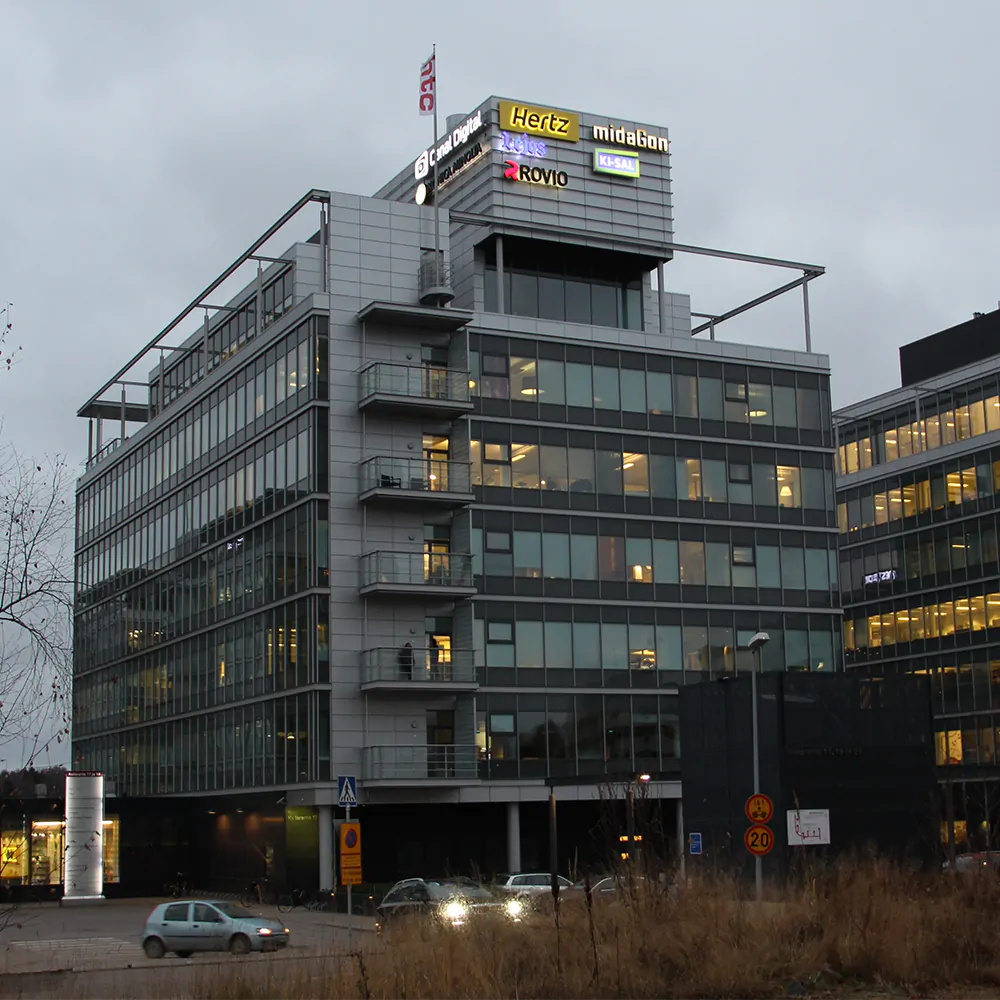
I did not realize at the time, but a couple of my friends later pointed out that she had likely called the cops, who were waiting nearby. This woman never did anything suspicious, at least to me, but she eventually crossed the street, I apologized and she and I started walking back to the university campus together. There was a likely signal amongst all this, that the cops interpreted as everything being ok. I have no idea what it was.
During our walk back, I apologized several times. The woman (I will not name her) said that she accepted my apology but was nevertheless scared. She then added an important piece of context – the 2012 Nirbhaya gang rape in Delhi. This was the brutal gang rape of a 22 year old physiotherapy intern, on a moving bus, by a group of men. Jyoti Singh was raped and then left to die on the side of a Delhi road. Women being raped in India is very likely something that happens every minute but this incident generated a lot of outrage because it hit too close to home for India’s wealthy and rich. One of us was the victim and we had to do something. This led to large protests, in Delhi and across India. Protests so large that the cops used force to disperse the crowds. Jyoti Singh eventually died but the whole situation received worldwide media attention, cementing India’s reputation as not just a lawless country, but an especially dangerous one for women. This was extensively covered across European media, and, understandably, scared a lot of women. Given that the Nirbhaya story was fresh in the media, the woman in Helsinki was understandably scared. I assume she worked out that I was not a threat, just a clueless man who happened to be walking behind her.
In hindsight, I do not blame myself because I was naive. I do accept that a man walking behind a woman for over an hour on a deserted street (even in broad daylight) is a terrible idea. I am not, nor was I ever, a rapist but a random woman cannot verify that. Life for women everywhere is scary, even in the West. I cannot fully appreciate the mental burden of constantly having to worry about your safety. My safety is just something I take for granted. My baseline is India and compared to India, women in the West are safer. Safer, but not totally safe.