During the COVID-19 pandemic, I had my first taste of working from home. I did work remotely in the past, but this was my first sustained stretch working from home. I realized a couple of things very quickly. One, that paying for a quality chair is a good idea. Two, that paying for a quality sit-stand desk is a similarly good idea. Finally, that if you are not physically in front of people, having a quality image of your face on their screens is an excellent idea.
I’m old enough to remember film cameras. I vaguely remember my parents owning disposable point-and-shoot cameras as well as a couple of cheap Nikon film cameras that eventually broke. I don’t actually remember much about the cameras themselves but I was intrigued by the batteries. I do not remember the exact model but they were definitely not AA or AAA batteries. They were something different. I also remember the photos after they returned from the studio – soft focus, often washed out colours, grainy. At the time, that was the best we had so I just accepted it.
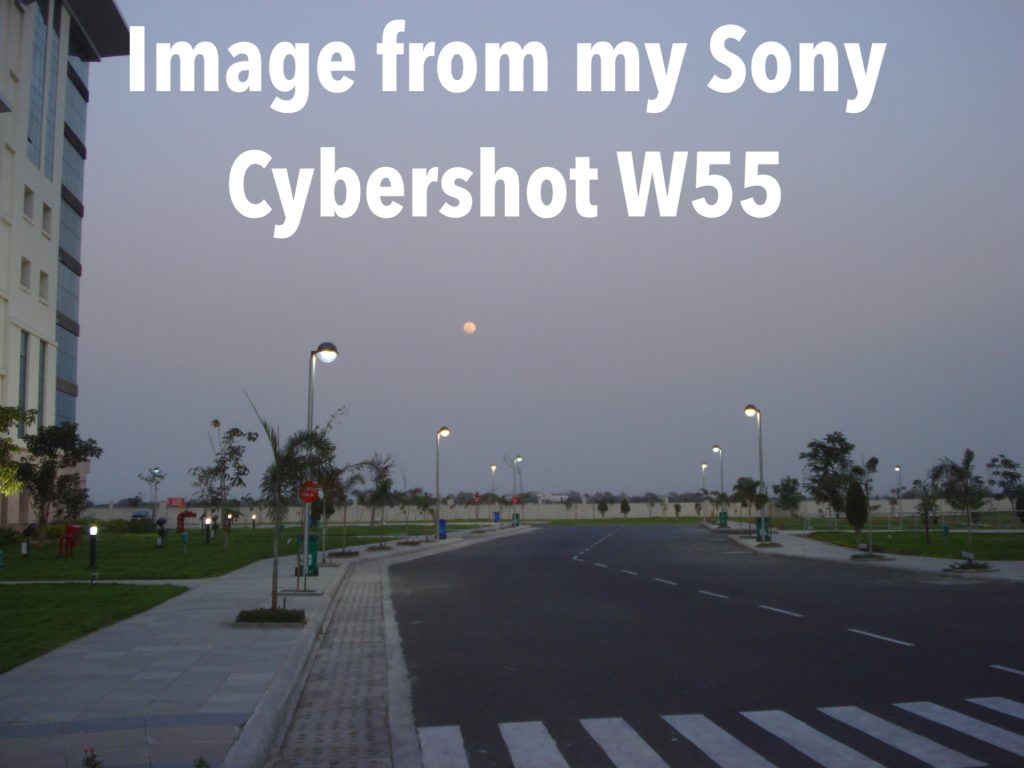
Eventually, my dad bought a Sony Cybershot DSC W-55 digital camera. This was the mid 2000s and was during the brief interval in my life when I didn’t read product manuals. I had no idea this was a mirrorless camera. I also had no idea what W and T meant on the zoom rocker. In my defence, zoom in and zoom out make more sense. W and T stand for Wide and Telephoto respectively, but the average person will not make that connection. Anyhow, the camera manual did describe this, as I recently discovered in the year of our Brahma 2025. I would set the camera to auto and hope for the best. It survived Mumbai’s trains, Rajamundhry, Baroda, Helsinki, Stockholm and finally Utrecht. Often, this camera did a pretty good job. I kept this camera between 2007ish and 2014, when the battery died. It was a pretty good camera, certainly producing better photos than any phone camera I had at the time. My phones were cheap Nokia models and eventually, a Nexus 5. I just abandoned the camera one day, deciding that I was better served with my phone.
That changed. And how. During the pandemic, I realized that the tiny webcam in my laptop produced horrible quality video. I also realized that the lack of focus meant that too much of the scene behind me was in focus and that the webcam software made me look white. In fairness, pardon the pun, I would love to navigate the world as a white man, but I am not a white man so a camera making me look whiter than I am is insulting. This led me to buy a cheap webcam – a 1080p Logitech model that was incredibly popular during the pandemic, when everyone realized that laptop webcams are terrible.
There is a reason I studied engineering and that reason soon came to the fore. I had to know WHY my laptop camera was so bad, WHY the webcam was better but not better than the streaming setup of some Twitch streamers. I also had to know what a DSLR was and how I could achieve that beautiful background blur on my video calls. I started reading camera manuals and soon discovered the reason I started but stopped reading the manual of my first Sony camera – these manuals assume that you already know the jargon of photography. If you are reading this, do you know what an f-stop is, what aperture is and what focal length is? Do you know how each of these interact with ISO and exposure length to produce a certain image? I did not and even now, I barely understand these terms. I have read extensively about them and I do know a few things but I am far from an expert. Camera manuals were written for experts.

The answer to why certain cameras are better than others boils down to physics – the physical area of the image sensor. A real camera has an image sensor around an order of magnitude (10X) larger than a typical phone camera. Similarly, a phone camera’s sensor is larger than the webcam sensor, which in turn is larger than your laptop’s camera. That’s it. Phone cameras do try to compensate for smaller sensors with software trickery, a process called computational photography. There remain, however, laws of physics that cannot be broken hence why a picture taken on a phone looks nice on the tiny phone screen but as soon as you print it out, it looks terrible.
This motivated me to invest in a real camera and to repurpose it as a webcam. The Indian in me scoffed at spending thousands of dollars on buying a new camera so off to the used market it was, specifically, Facebook marketplace.
I did my R&D and discovered that something called “clean HDMI output” was desirable so I bought the cheapest Canon camera I could find that provided clean output, a Canon T3 from 2011. I bought this in 2021 so, at ten years old, it was already obsolete. This camera came with the kit lens, a term used for the cheap lenses that manufacturers bundle with the camera body. It also came with multiple batteries and chargers, neither of which I needed. I needed a way to get video from the camera into my computer. At the time, Canon provided free software called EOS Connect that used the USB port on the camera to stream 720p video from the camera. This was already much better than my tiny Logitech webcam and I was thrilled.

Soon, however, a new problem emerged – my audio came from an external mic, not from the camera. The dated processor on my camera meant that the video and audio were out of sync. Worse, this was not an easy problem to fix in Zoom or Microsoft Teams. What to do?
I decided that the solution was a USB capture card. Essentially a device that took the HDMI video from the camera and streamed that to my computer, without Canon’s Japanese trickery in between. This worked well until I realized that I did not want people seeing my Shinkansen model trains behind me, lest those same people think that I was a transit-loving Socialist (I am).
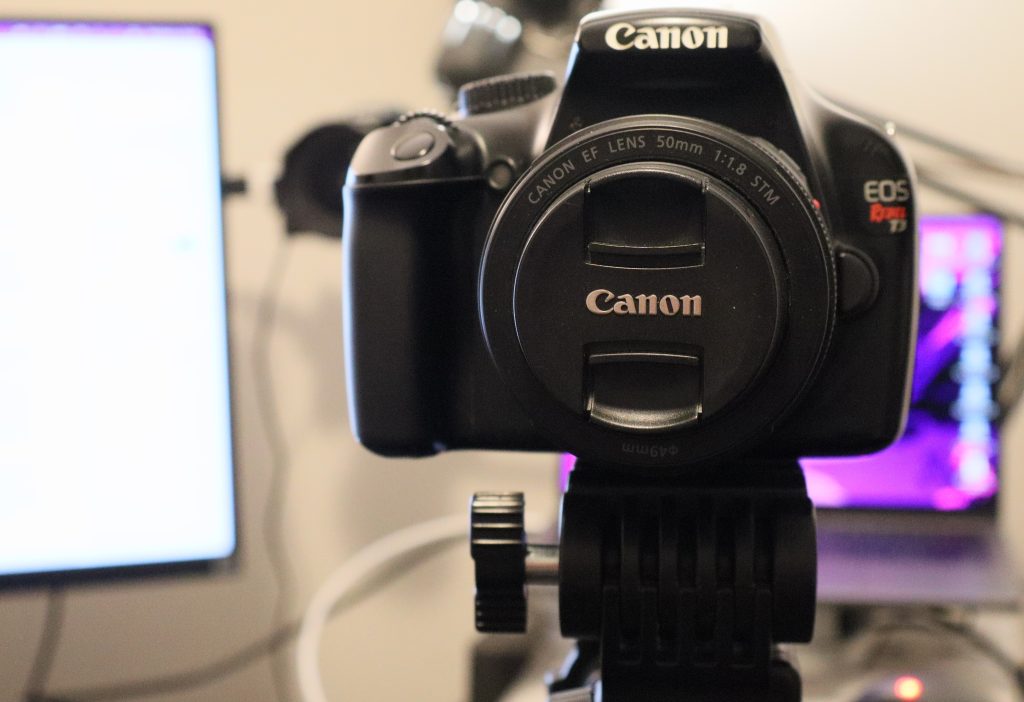
I went on the inter webs and to YouTube this time. Dear reader, YouTube is not a reliable source of information at the best of times, and relying on it for nuanced technical information is a bad idea. I surmised from several videos that I needed a better lens and a lens that let in more light would make me look like a video game streamer on my video calls. So I bought a lens with a focal length of 50 mm and a wide aperture that let in a lot of light. I plugged that into my camera, placed at arms length in front of my face… and realized that I now had a very high quality image of my nose with a blurry background. You could choose between seeing one of my eyes or my nose or my misaligned front teeth. The knowledgeable among you already know the problem – the higher the number attached to the focal length, the more zoomed in the image is. This was my first mistake.
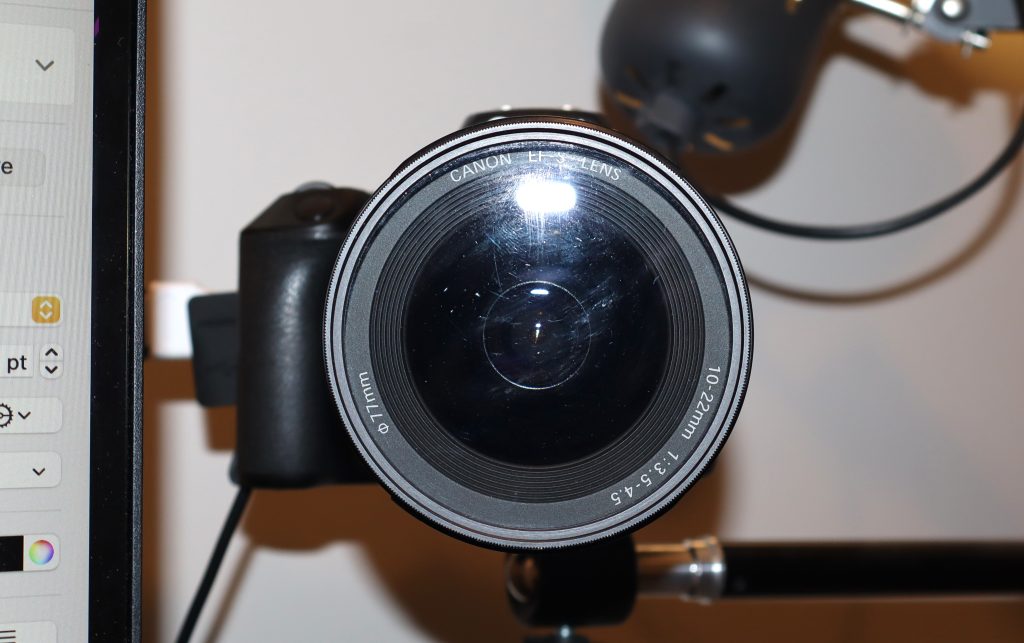
No matter, back to the inter webs I went and discovered that I needed a lens with a smaller focal length, ideally around 18 mm. At this time, I finally decided that I needed a better camera, ideally with autofocus in video mode, so I went back to Facebook bazaar and found a Canon SL3 for $ 400. This is a 2019 model and among the last DSLRs that Canon made. Found hundred Canadian dollarydoos was a lot of money for a webcam but I decided that if I was doing this, I would do it the right way. I then embarked on a quest to find an 18 mm lens and I eventually did find one, an older Canon zoom lens rated for 10 – 22 mm. Good enough for a webcam. This is the set up I still have and it works well. So well that I never move the camera or the capture card or the camera arm. It just sits there as I work. The only thing I do is switch the camera on or off as needed.
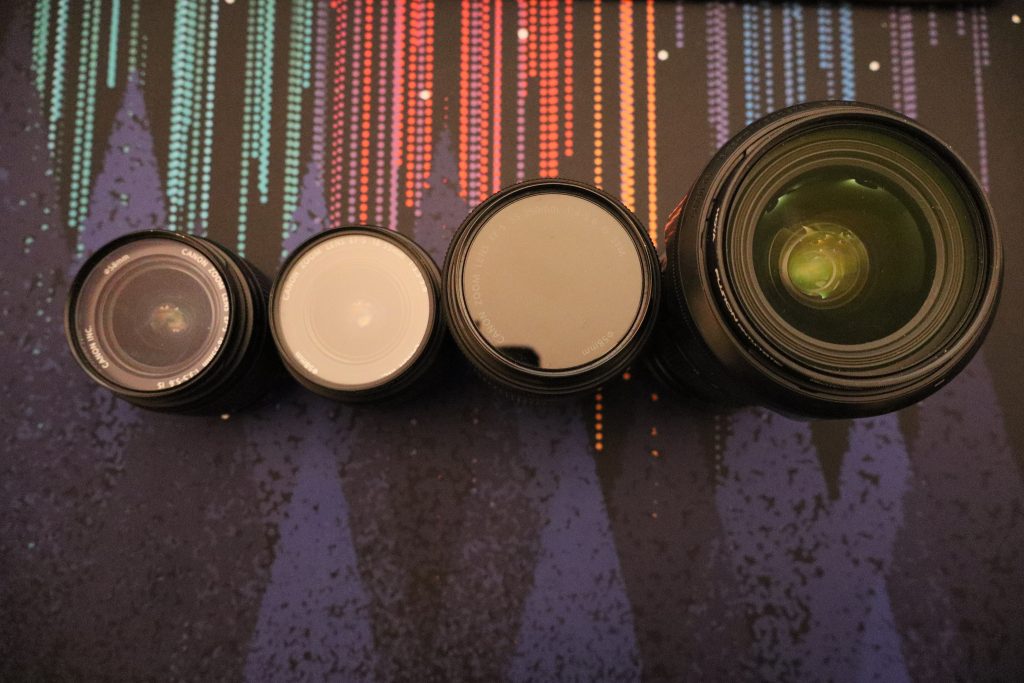
You likely noticed the list of equipment in the penultimate sentence there. Yes, I now owned a tripod, a camera arm, an HDMI capture card, two DSLR cameras, four lenses, a dummy battery for each camera. And this was only the start. Eventually, I decided that I liked photography combined with my hobby of fixing things so I bought a “broken” zoom lens, technically a telephoto lens but that word sounds esoteric. Like the word esoteric. The lens wasn’t actually broken, only one of the communication contacts was rusted. I cleaned the rust, cleaned the glass and I had a new lens. I used this to take pictures of birds and my mortal enemies – rats in trees, more commonly known as squirrels.

By this point, I decided that I liked taking pictures that would stand the test of time so I needed a travel camera. I scoured Facebook marktplaats for months, scoffing at the thousand-dollar price tags of used mirrorless cameras. Ah, the mirrorless craze. This meant that many amateur photographers, convinced that the mirror in their camera was the only thing standing in the way photographic greatness, were looking to sell their old camera gear. This is how I found amazing deals on my existing cameras and older Canon lenses. This time, though, I was in the market for a mirrorless camera myself and I was unwilling to pay the high prices they commanded. Eventually, I found a cheap Canon R100 for $ 450. It was small enough that I could carry it everywhere and that is exactly what I did. The internet will tell you that this is a cheap camera for a reason – Canon cut too many corners. No articulating screen, older processor, and so on. It doesn’t matter. It really doesn’t. I primarily set this camera to auto mode, let it do the maths and I just take photos. On Canon’s own website, this model is the #2 or #3 best selling camera.
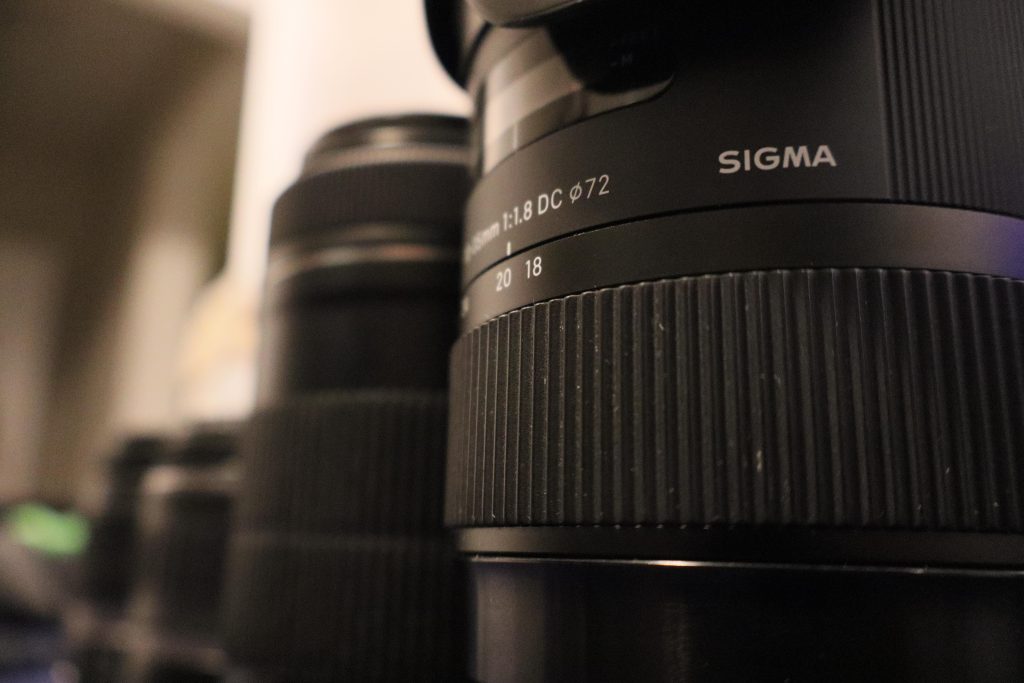
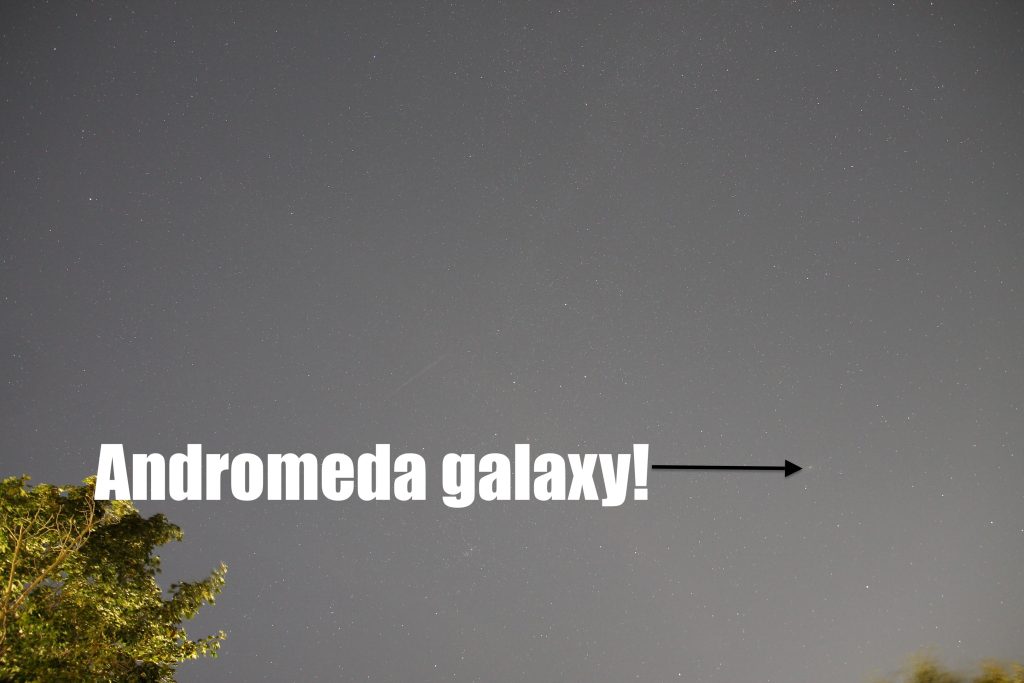
Later, I decided that I wanted to take pictures of the sky (the aurora and the milky way) so I needed a proper lens. “Proper” implies expensive and I eventually bought a Sigma lens for $ 500. The price tag when new was $ 1,300 Canadian dollarydoos. This remains the single most expensive piece of photography equipment I have purchased and I expect that record to hold for at least a few years. When I stood at the CIBC ATM withdrawing cash, I cried a little inside. This lens, however, produces some stunning images. A pity that I don’t know what I’m doing and so I rarely take any stunning images. Still, I can photograph the night sky and a lot of stars, and even the Andromeda galaxy! This brings me joy.
I will conclude with this – yes, your phone can take some pretty amazing images given its compact size. Yes, the best camera is the one you have with you in the moment. But, if you want images that you can print and frame as memories, ones that look like real moments, with real people, with imperfect faces, you should buy a real camera. I have many images saved over the years. When I recently printed a few, every single image from my various phones looked like rubbish. Why? Either the resolution was too low or the “computational photography” produced weird skin tones, strange patterns or just a blurry mess as the computer tried to guess what reality looked like. I don’t care if the Google or Apple engineers produced an AI model that guesses accurately. I don’t want a guess, I want reality. My skin isn’t perfect, neither are my teeth and my photography skills are far from good. But I don’t care. Auto mode is good enough, but it is only good enough on a real camera.
PS – the table shows the cost of every single piece of camera gear I’ve purchased over the past three years. It adds up to $ 2,095. I am certainly not happy with that amount but I must remind you – Canon will charge you double that for a single RF-mount lens. Not the camera, just the lens. Yes, a very good lens, but still, that’s over $ 4,000 for just one lens. All said, I found some amazing deals and am happy with my purchases. I encourage you to buy a real camera, but buy used. Let someone else take the hit on depreciation.
| Canon T3 plus batteries, a camera bag and kit lens | $250 |
| Camera tripod | $20 |
| HDMI capture card (Elgato, 1080p) | $120 |
| Camera arm (desktop) | $35 |
| Canon EF-S 10-22 mm lens | $200 |
| Canon SL3 with kit lens | $400 |
| Canon 55-250mm EF-S zoom lens | $60 |
| Canon EF 50 mm lens (f1.8) | $60 |
| Canon R100 camera with kit lens | $450 |
| Sigma Art lens 18-35 mm f1.8 with an EF-RF mount adaptor | $500 |