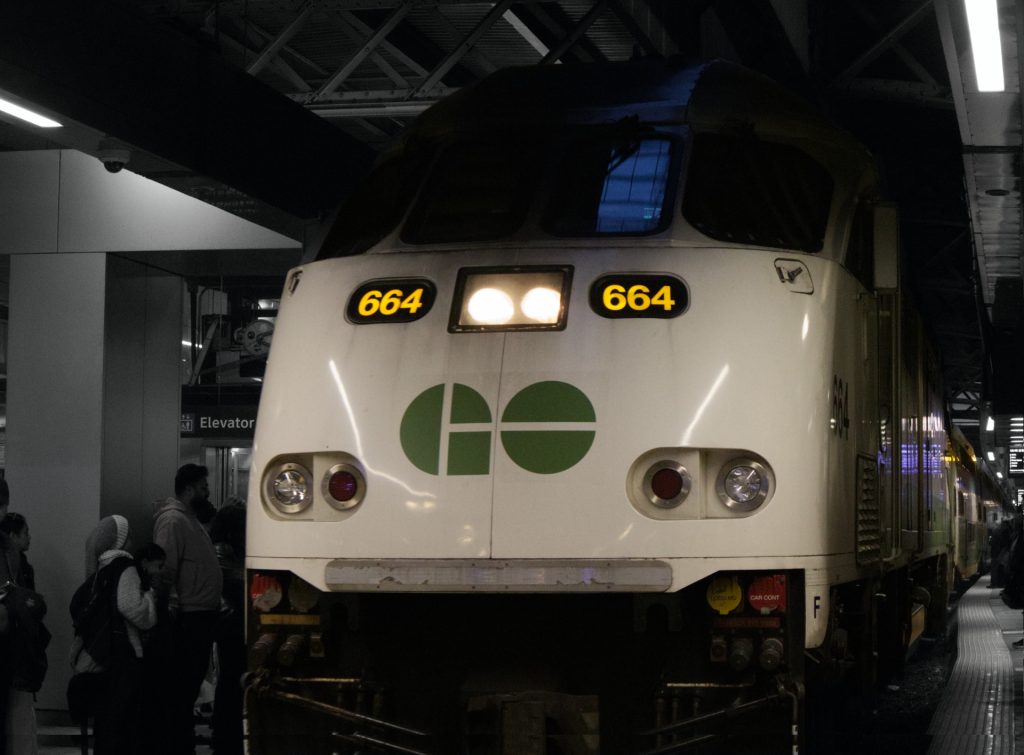
This past Sunday, I rode the GO train from Guelph to Toronto and back. That’s right, we finally have weekend train service between Guelph and Toronto. This means that I can arrive in Toronto for breakfast, watch a movie at TIFF, visit the Spacing store, buy a model tram, amble around, and then ride the train home. Oh, and the return journey costs ten dollary-doos. Ten dollars, for a weekend round trip on the train. I now don’t need a designated driver, other people can smoke marriage-iguana, and no one risks killing themselves or a pedestrian. You simply sleep on the train, stare out the window or read a book. I read book five of The Expanse.
Will the joys ever end?
I noticed about eighty people at 8 AM at Guelph station, all similarly excited to ride the train. The alternative is the bus, and the bus is uncomfortable, gets stuck in traffic and is generally slow. I saw parents from Kitchener take their kids to the Santa Claus parade in Toronto, because why not? No driving, no parking hassle, and despite the diesel engine at the front of the train, our carbon emissions were tiny.
On the way back, we walked to Union Station in Toronto and happened to be behind a couple of teenagers. You know, the youngs, of which I am not. They loudly shouted about walkable cities and better transit. One was dressed like Che Guevara and rode a skateboard. Ok, that’s one choice. They also yelled about THC, vapes, and Minecraft. As we passed a school, they yelled about how the building looked like a prison and the sort of place where people get shot. Ok, it is a mixed bag with the youngs these days. I wonder if these folks vote. I sincerely hope they do.
On the train back, we were seated across from a dad and his ten year old daughter. In between reading my book, I was busy eavesdropping on their conversation. The dad worked in construction and was engaged in an adult conversation with his daughter. She appeared fairly articulate. I have full faith that this girl will grow up into an educated, intelligent, intellectually rich adult because her parents treat her like an adult, with agency and her own opinions. On separate occasions, I also witnessed parents whose kids would likely grow up to be intellectually poor because their parents infantilise them, or worse, ignore their kids entirely. I worry about these kids because the supports needed are dwindling. Teachers don’t have the resources and means to help them. Well, at least one child will be fine.
Vancouver was the first city I visited in Canada. According to the Economist, Vancouver is among the world’s most liveable cities. It is easy to see why. At the time, I lived in the Netherlands and visited Vancouver for a reason that would later become very important (my wife). I had never seen North America before and immediately after I stepped off the plane, I saw a woman with her child on a leash. A Canadian woman, travelling back from Amsterdam, had her toddler on a leash.
I associate leashes with animals and human sex acts, not human children. This was already jarring but the visit improved from there. I have since visited Vancouver numerous times and I tremendously enjoy the city. For one, I love the ocean. Yes, Vancouver is not exactly on the open Pacific Ocean but it is close enough. I also love the air. Most cities by open water tend to have clean air. Lately, climate change and wildfires mean that Vancouver’s air is regularly among the most polluted in the world but the rest of the year, it is quite nice.
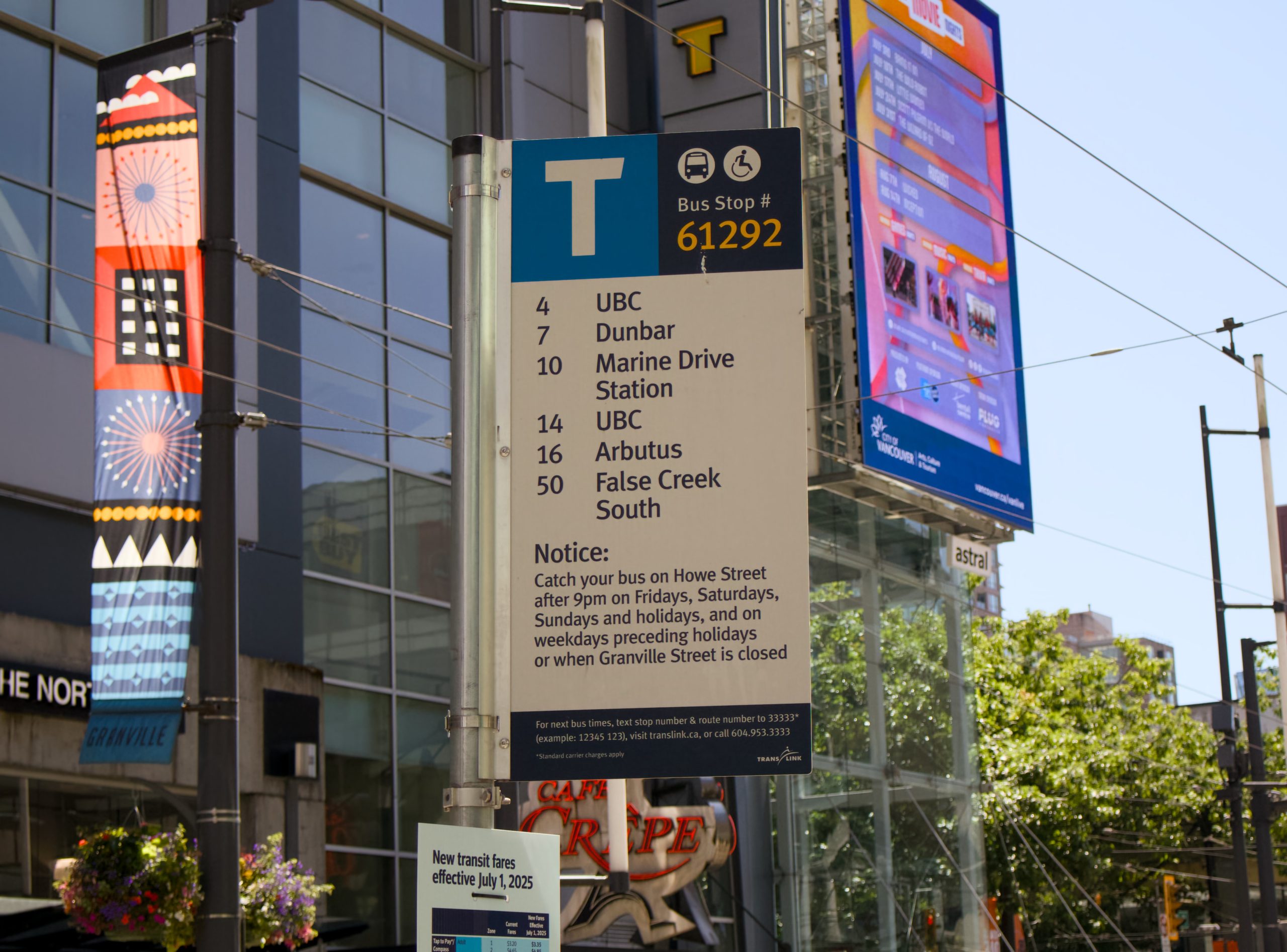
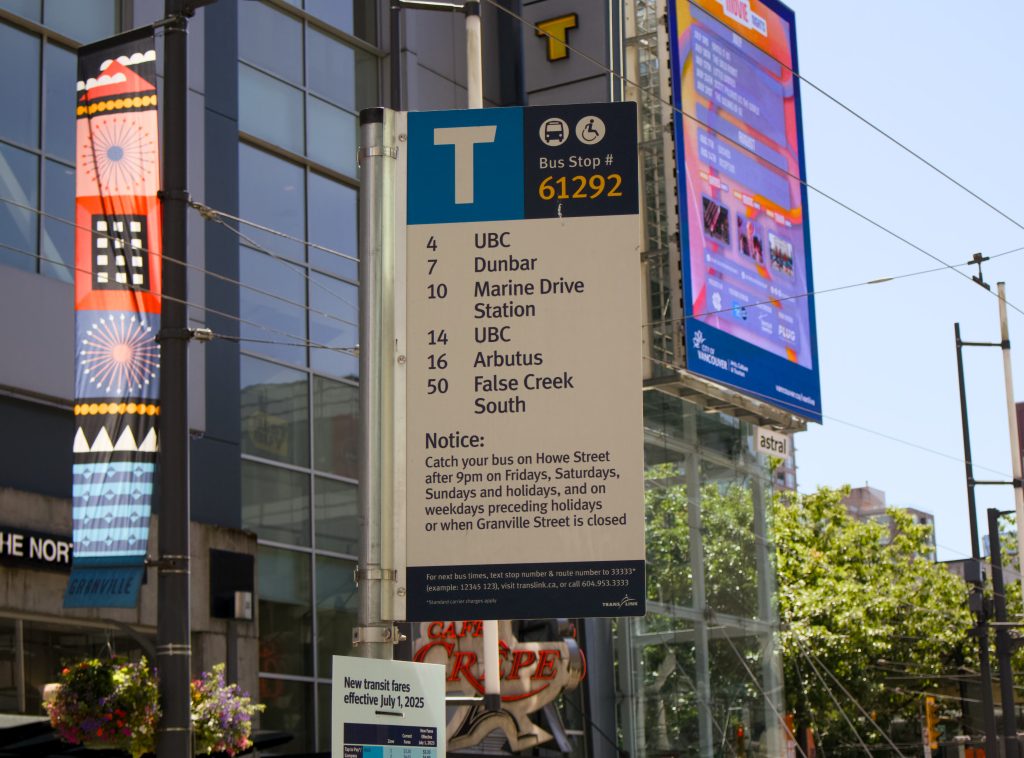
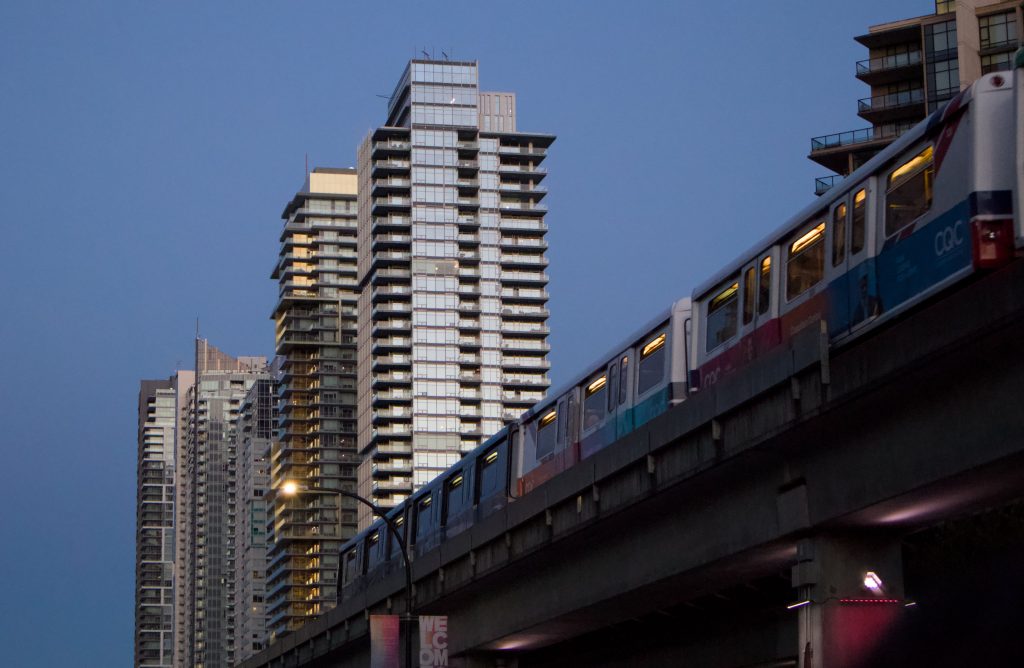
One aspect that I especially like is the public transit. By North American standards, Vancouver’s public transit is amazing. If you live in the city proper, the bus and metro network are excellent. So excellent that you barely need a car. Contrast that with southern Ontario where the entire region is designed around cars and too many people drive vehicles the size of tanks. I feel safer on the Sky Train in Vancouver, with a homeless person nearby than driving along Ontario’s highway 401. Yes, I am inside a climate controlled pod hurtling down the asphalt at 100 km/h, but one wrong move by a danger-loving moron and I could be dead. The worst that is likely on public transit is some homeless person yelling a slur at me. Yes, the homeless problem in Vancouver is significant, innocent people have died and there is a section of the city centre that is largely unsafe, but more than one person dies on Ontario’s highway 401 and you scarcely hear about how monumentally unsafe it is.
I made this point in the past – transit is liberating. Heck, Vancouver’s Sky Trains don’t have drivers and this is technology from the 1980s. That is real freedom. Sitting in the front of a metro train, staring out into the tracks. Some metro stations are extremely well designed. Several Sky Train stations in Burnaby integrate shopping areas, transit and walking paths. That’s how I imagine my ideal life – exit the train, buy groceries and walk home.
People seem to be more active in Vancouver. That could be because the weather is milder or because physical activity offsets some of the crushing problems in the city. One of the most significant is the affordability crisis. Housing in unaffordable. My household is among the top 12% by income but even we would struggle to afford a one million dollar home. And mind, you, a million Canadian dollarydoos gets you into the real estate market in Vancouver, or in less polite terms, you will likely find a house that needs lots of work.
Vancouver’s weather is terrible. Much like western Europe, ocean currents drive warm, moist air towards the poles and this tends to fall as a never ending drizzle. This drains the body and the soul but the humidity is great for plants and wildlife.
On the upside, you can spot lots of wildlife. Blue herons and even dangerous grizzly bears. I do not recommend trying to pet a bear If you see a bear, you avoid it.
Vancouver island is one ferry ride away. The rocky mountains are close by. If you like skiing, the national parks are a couple of hours away. The US is also nearby but I recommend avoiding their brand of freedom lest you find yourself on a detour to a prison in El Salvador.
Would I live in Vancouver? Sure, if I could afford it. I cannot and am unlikely to ever be able to afford it on my income. Inheritances are nice, but do not count. I wonder what will happen to the city in the long term. The pressures of housing and general affordability will drive some people away. Family will push others to stay. I really hope that the city is able to get its act together and increase its density, allowing more young people to move there and stay.
Geography of Mumbai, as relevant to this story. Note – map not to scale. Some liberties taken with accuracy.
This story involves geography. Some fantasy books like The Lord of the Rings include maps at the back of the book. Even some Winnie the Pooh books include maps. For that very same reason, I included a map here.
(Some details are embellished for dramatic effect)
Stage One – Boarding the train at Vashi
In the past, I was an engineering student. I lived in the Bombay suburb of Kandivali and commuted daily to the suburb of Vashi. This involved a ninety minute journey including three trains on three different train lines. Bombay’s local trains generally run north-south and Kandivali-Vashi is an east-west journey. Not ideal.
In my final year of engineering, we were all forced to participate in an industry project. This involved trying to solve real-world problems without the appropriate tools or training, as is the norm in the great nation of Bharat. The end of this process is the “presentation” where you cosplay as a professional, dress formally and speak about your work and achievements. This is usually a shorter day at college and most people leave at around 13:00. A typical day ends at about 16:00.
These presentations require presentation software and software requires a laptop. Back in the late 2000s, laptops in India were expensive and difficult to find. Through privilege, I had one. A bulky Toshiba model, but still, I had a laptop. That day, I had two bags with me. My backpack and my laptop bag. This will be important later.
Vashi is not a terminal station but it does have a few trains that start from there. Vashi is on the VT (Victoria Terminus) – Panvel line and is the first station outside the city of Bombay, just across the creek. I refuse to participate in the Sena’s great renaming project and refuse to acknowledge the sex change operation they performed on train station names. I have no sympathy or love for the British or especially the British Raj but the name of the station was just fine. If it was a real problem, that name would have changed sooner. Anyhow, I digress.
Victoria (F) Terminus, now C Shivaji (M) Terminus
If you board a train that starts at Vashi, the train is nearly empty. You have your pick of the seats which was the only motivation my three Gujarati friends and I needed to make a mad dash for the train station. Our presentations ended around 13:00 and we knew that the next train was at 13:14 or such so we hailed a rickshaw and made haste. We boarded the train just one minute before it left. The First Class compartment was empty. This being Bombay, the weather was tropically warm and oppressively humid. The solution was to stand near the doors (Mumbai local trains do not have automated doors) as the train sped across the Mankhurd bridge across the creek. This is what we did and when we arrived at the other side, we returned to our seats. Before we stood up, though, I placed my laptop bag on the overhead luggage rack. This is not something I usually do and always have my bags on me or on a seat.
View from the train, looking south, crossing the Mankhurd bridge to Vashi.View from the first class compartment. I held my camera out of the door. I DO NOT RECOMMEND hanging your body outside a moving train!
The train crossed the creek and we were seated again. The weather and the swaying of the train lulls one into sleep and sleep soon overcame us. Our first change was as Kurla, about thirty minutes after leaving Vashi. Kurla is a busy station as it is on the Central line as well as the Harbour line. Trains from Vashi to VT use the Harbour line. The din of humanity and train horns signalled the arrival of Kurla and all three of us woke up and hurriedly gathered our belongings. We hopped off the train just as it was leaving and I counted the bags we had. Three.
We boarded the train with four between the three of us and there were now three bags. Which one was missing? Oh crap, it was the bag with my expensive laptop.
Stage two – Panic at Kurla
I panicked. My two Gujarati friends also panicked but they did not have skin in the game so their panic levels were lower. This was handy because they hatched a devious Gujarati plan. The plan was that we would board the next Harbour line train to VT and follow our train with my laptop.
Here is one more piece of important information. The three of us had train passes from Borivali to Vashi. This route had two possible train changes, one via Wadala and the other – the one we used – via Kurla. Our train passes were valid on only that specific route, nowhere else. The journey we were about to embark on was literally illegal.
The Gujarati duo did not consider legal issues in their mild panic and so off we went on the next train. On this train, we debated our options and made a plan. The first problem to solve was communication. We were three people with two mobile phones. One Gujju bhai’s phone was broken so we needed a solution.
That solution was for one Gujju bhai to take my phone. We reached this conclusion before working out the plan.
But we needed a plan second. That plan was for me to alight at the next stop and to watch the trains returning from VT. But how to communicate? Ah, we did not consider that. I got off at Sewri and the two Gujju bhais sped off with both phones.
Stage Three – Panic at Sewri
At Sewri, I hoofed it across the bridge to platform one, where trains arriving from VT stopped. I located the First Class markers and waited fo trains to arrive. I hastily boarded the first and looked up at the luggage rack. Nothing.
I did this twice more and the resident ticket checker – the enforcer of the law – noticed what I was doing. Here was a curious young man hopping on to trains and then hopping off, almost as if he was confused. The TT asked me for my ticket and I showed him my 100% invalid train pass. He noted that I was technically not allowed to board trains at Sewri and so asked me exactly what was transpiring.
I explained my predicament to him and he – surprisingly – understood. He took me to his office and asked me which train I was looking for. He consulted his charts and told me the exact time when that same train would arrive. It did and I checked the First Class compartment.
Nothing. As far as I knew, my expensive laptop was gone and I would have to explain this to my parents. They would be livid.
Stage Four – Gujjus at Masjid
The title of this stage is a pun. Meanwhile, on the train heading south, the two Gujju bhais were in furious conversation. They were also travelling illegally but this time, the first class compartment was not empty. There was a third Gujju, eavesdropping on this conversation. He realised he could help and help he did. The story was that his buddies worked in the suburbs but lived in the city. There knew about the train starting from Vashi and usually boarded it together, in the first class compartments, and played cards. Or ate snakes, which is what Gujaratis are well known for doing. Anyhow, on this fateful day, he missed the train and his buddies and so was on the next train, in the same compartment as my Gujju buddies. The solution was for him to phone his buddies. He phoned, they looked for my laptop bag, they located it and planned the rendezvous.
This was to be at the station of Masjid Bunder, the penultimate stop before VT. The meet happened and five Gujju bhais went off to drink falooda. At the end of this, after much relief, my two Gujju buddies realised that they had my laptop but had no idea where I was. At this point, the realisation hit that they also had no way to contact me. My phone was with them. Two people, travelling together, had the two phones we had between us. They also realised that neither of them remembered which station I got off at. Oh my, what now?
Stage Five – Panic at VT
These two debated their course of action and concluded that my course of action was to head to VT. How they reached this conclusion, I do not know. They headed to VT, again, without legal tickets and proceeded to check the station for me. I was not there, of course, I was panicking at Sewri.
What next? Head to the station master’s office, skip the fact that you don’t have tickets and ask for help. This is what the Gujjus did and the station master sent out an announcement asking for E Rebello to approach the station master’s office. E Rebello was too far away to hear this message. The Gujjus then repeated this at Masjid Bunder and when they received no response, they concluded that I had killed myself due to social shame. They had no way of contacting me and did not know me well enough to think like me.
Stage Six – Realisation and Communication
Back at Sewri, I proceeded to panic. The train with the highest chance of containing my laptop departed, there was no laptop and I had no solutions. My solution was to check every train arriving and at this point, the TT dismissed me as crazy and so left me to my devices. I also realised, mid panic, that I had no way of contacting the Gujju duo. I could not remember either of their phone numbers and so a public phone was useless.
I considered calling home and reporting the day’s events but soon realised that would be counterproductive. My mom would also panic and besides, she did not have the Gujju duo’s numbers either. So I waited in a panic, for about three hours, my mind racing.
Somewhere in that panic, I had a brainwave, an obvious solution even. CALL MY OWN NUMBER.
I knew my own number and I knew the people with my phone. I was surprised that this obvious solution to the communication dilemma had eluded me for almost three hours. I found a phone, dropped in a one rupee coin, dialled my own number and POOF! Communications established.
I learned of the days happenings and that the Gallivanting Gujju Duo were on a train headed north. I waited for them, boarded the First Class compartment, illegally. We all headed home, laptop on my shoulder, disaster having been averted.
After this event, I resolved to never store my luggage where I could not see it.
This served me well up until I took a train from the Netherlands to Belgium, where a skilled thief snatched my bag from the luggage compartment and walked off at Mechelen station. Bad luck for him. All he found was a worthless Indian passport and some used clothes.
Answer upfront – yes, it was worth it. Had I stayed in India, I would have hated my life, the country, my forced marriage, my bank balance and my neighbours. I would hate my life and be frustrated constantly. Instead, I live a comfortable life, love my wife and would trade none of this in a trice.
I am Indian. When I was fifteen years old, like most Indian students, I was asked to pick a career. How you can do that at fifteen years old is still beyond me. At the time, I did have access to the internet and I had access to some information about how one does this. What I did not have was wisdom and experience. Neither my own nor borrowed. I did not have extended family members who were doctors, engineers, lawyers, artists or among the myriad careers one can choose at fifteen years old. I did not even know that I was good at maths or science. I am still above average at both. I was asked to make this choice, while sitting in Bahrain, and while knowing that my family was about to move to the great nation of India, a place where humanity and humans go to die.
Once I moved to India, I had to pick between three choices – science, commerce or arts. I was (and remain) quite bad at the arts and I did not like money so science it was. Eventually, I ended up in engineering college. I hated india when I was ten years old and at fifteen, that did not change. I still dislike India to this day although I have softened my opinion of those less fortunate than me. I despise the Indian state, the Indian way of thinking and the general ethos of life there, the idea that things won’t get better so why even bother? I was determined to make a better life for myself and I knew that moving to the West was the path to that better life. I resolved to live a better life and to be a better person. Unfortunately, once again, I had no source of direct information or experience and so turned to my old friend, the internet for answers. I also did not have enough money in the bank so I went to work, at one organisation named Lhussen and Bhutto (unlikely to be Larsen and Toubro).
My escape route was the same one use by approximately 1.3 million Indians in 2023 – education. I went abroad to get an education. This meant picking from two options yet again – follow the herd to the anglophone countries or aim for somewhere else. “Somewhere else” spanned Venezuela (yes, that Venezuela), Turkey, The Caribbean, Austria (not Australia), Kyrgystan and my eventual destination of Finland. Finland was so unheard of that my mom called a priest to bless me before I departed and that man had never heard of Finland. Oh well.
I will skip the details here as that’s not the point. My aim here is to tell you whether it was worth it. When your savings are in the shitcoin called the Indian Rupee, studying abroad is perilous. Your savings are meagre and do not get you far. Information is also difficult to find. Most Indians make a beeline for the USA, the UK, Canada, Australia or New Zealand. English is the reason why, however, all these countries charge international students fees. Astronomical fees, if you are Indian. The fees at a decent US public university were comparable to the total worth of my parent’s real estate portfolio. The solution is to borrow money from an Indian bank and to hope that the stars align for you. In the case of the USA, that means finding a decent university, completing your course, finding a job, and staying legally long enough that you earn enough to pay back your loan. This was too much risk for me so I dropped that option entirely. Canada is a smaller market with similar costs so that was out as well. Same for the UK and Australia.
At the time (2013), most universities in the Schengen area (continental Europe) did not charge tuition fees. Living expenses were the only cost, but even those were significant when you factored in the exchange rate. Anyhow, I decided what I wanted to study and then trawled various internet forums and university websites. I took notes, estimated expenses and looked at the job market via job sites. Eventually, I found my way into a few universities. TU Eindhoven was one but the Netherlands charged tuition fees. Not astronomical but significant. That was not an option. FH Aachen (not RWTH) also wanted me but I did not want them. Finally, I selected TKK – Teknillinen korkeakoulu – now christened Aalto University, in Espoo, Finland.
No tuition fees but it was in a corner of Europe, closer to St Petersburg than to Berlin and separated from the mainland by the Baltic Sea. Living expenses in the Nordic countries are also high relative to the rest of Europe. The job prospects were also bleak, especially since the Finnish language is difficult to learn. No matter, I decided to take the risk and to book my tickets on Turkish Airlines. Away we went!
Two years later, I was pantti hunting (yes, pantti, Finland’s bottle deposit system) and applying for jobs, desperate to extend my study permit by another year. Persistence paid off and I found a job in the Netherlands and started making a life for myself. Things were looking up. At this point, I could have stayed in the Netherlands. I was on the path to learning Dutch, integrating into Dutch society and eating cheese. As life would have it, I found love in a Canadian woman and this compelled me to move to Canada. Once again, I faced the struggle of finding a job, building a network and starting over, in yet another country. It all worked out in the end.
Was this worth it? Absolutely. I would not have it any other way. Yes, there was tremendous risk here. Moving to a fragmented continent where I did not know the local language, and where I had neither contacts nor familiarity with the region are all risks, huge risks even. Living in the cold for a man who grew up in the desert, another risk and challenge. The worst case was returning to Bharat (the transition started in 2014) with a degree from a university that no one recognised and convincing employers that I was employable. I was not in financial ruin so that was a plus. I have friends who could not find jobs in the US after spending lavishly on degrees. That is arguably worse – paying off US fees in rupees.
There was the risk of not finding a job after my master’s degree. I could have continued on to a PhD but i viewed the opportunity cost as too great. In fact, today, I earn as much as my colleagues with PhDs but I have the advantage of more work experience and more money in the bank. I did have a few offers to start a PhD but I declined them all. That was my option of last resort, the one I would take if I chose to stay in Europe and wanted to earn a small amount of money. Then was the frugal Indian mentality and living with the knowledge that my bank balance was only going down. This led to some questionable decisions like skipping meals and buying almost stale vegetables. I vividly remember calling the HR person at the Netherlands-based company where I eventually worked and noticing that it was an international call, hence it was expensive. In hindsight, that was the best two Euros I spent because it got me a job. None of the other candidates called, only I did.
On top of all this was the racism, the risk that my ethnicity carried a level of stigma and assumptions, many justified, some not. The pressure to apply for jobs across Europe, not wanting to limit myself to one country or region. The political uncertainty that came with Brexit and the Syrian refugee crisis of 2015. The hate against immigrants (I was never an expat, that’s a white people thing), the costs and challenges of true integration.
I could go on.
Was it a lot? Yes. Was it all risky? Yes. Was it scary? Yes.
Past Lives is a 2023 romantic drama film focused on the literal past life of a Korean immigrant child in North America. The central plot line is how this child’s parents decide to leave South Korea for Canada, how the protagonist then moves to the USA for professional success, finds it, finds love and in between, reconnects with her childhood sheetheart, disconnects and then is forced to reconnect and examine their relationship.
I will not review the film nor post spoilers. I will take another angle – the angle visible to someone who is themself an immigrant, or a double or triple immigrant depending on how you define it. The movie’s protagonist claims to have immigrated twice, first to Canada and then to the USA. I immigrated from India to Bahrain, then to India, then Finland, Sweden, the Netherlands and finally Canada.
These moves taught me some simple truths – home is a state of mind but for some, that is intertwined with a location. Any relationship takes effort – love, friendship, siblings, parents, children. Those are thoughts for another time.
Your name is an integral part of who you are. Not just your name, but the names your friends use. I have one legal name but several nicknames. Some friends know me as Fish. Others as Elda. Others as simply Eldrich. Each has a different connotation in my mind, a different emotion. It is much the same in the film – Na Young becomes Nora. A new name for a new life. One can pretend that your old name ceased to exist, but it doesn’t.
Another is language. Yes, I am fluent in English but I do not speak the same English with everyone. In Canada, I stick to standard English with metaphors borrowed from cricket and football. With my friends from Bombay, I still use English but with a sauce of Hindi and a seasoning of Marathi words. With yet others in Bombay I speak English but end every sentence with “men”, similar to the Caribbean “mahn”. The inflection is also entirely different. What I say, what I mean, the phrasing, the cadence, they all change with language. Even more different is my speech in Hindi where I use English vocabulary as a crutch until I figure out what the Hindi word for encyclopedia is. (it is ज्ञानकोश or gyan-kosh; विश्वकोश or vishwa-kosh according to Collins).
At one point, the character of Nora remarks how marriage is like two trees in the same pot. Their roots intertwine and this leads to conflict. How you deal with that conflict is important.
Another theme in the film is the desire to outgrow your past, to not be bound by it. I too feel this sometimes. You cannot deny your past, it is forever there but it was a moment in time. A moment that has passed, with people who likely changed. You, too, changed.
Then there is ethnicity and how it means different things in the new world versus in the old world. I am Indian. I cannot change that. Lots of people in Canada are ethnically Indian however, they are distinct from me in an important way – they are Indian AND Canadian. Both at the same time. I am not and never will be despite official documents saying otherwise. I am Indian Indian. From India, fresh off the plane, with an Indian accent and many Indian sensibilities. In the new world, cultures are often reduced to the occasional festivity, the odd piece of cultural baggage, the archaic if baseless custom, aromas in a kitchen or restaurant. In the old world, an ethnicity is who you are, your identity, your role in the world. It is how you behave, how you are expected to behave. Your ethnicity is your culture, how you carry yourself, the food you eat, the ingredients you buy, where you live. It is a curiously new-world phenomenon that your ethnicity and nationality can be distinct and different. Separate, compartmentalised, changing with the date. On diwali, you are Punjabi. Canadian on Christmas.
Finally, your past home, your homeland, the motherland. As a first-generation migrant, you never really leave it and it never leaves you. Your relationship to it is different depending on circumstance. Some – like Syrians or Sri Lankans – have a tortured, fractious relationship with the mother country. A civil war, ethnic tensions, decades of dysfunction mean that not much of their lives are left there. A clean break for some, a swift detachment for others. In the other case – such as mine – life in the mother country goes on without you. Those you left behind carry on in peace, living their lives without you and you without them. India is not at war, there is no conflict and a large section of my extended family continue to live there. I visit them occasionally but it is a strained visit. They have changed. India has changed. My recollection of the country, of the city, of my neighbourhood is no longer reality. It was but a moment in time. A past life, maybe?
L – A Gacha-gacha rocket from the Miraikan science museum in Tokyo.
R – The assembled E233 Tokyo metro car
At the Toronto Anime North convention in 2022, I discovered nanoblock, the micro-sized building blocks made by a Japanese company called Kawada. They are small enough to be fiddly and unstable but give you tremendous satisfaction when you assemble them into a more concrete whole.
I was slightly taken aback by the prices – most sets are around fifteen Canadian dollary-doos. Remember that I am taken aback by any price that is not zero – after all, I am Indian. I bought two at the nanoblock store in Tokyo Skytree – admittedly, not the cheapest location.
One set was a model of the E233 trainset developed by Japanese train company JR East. The model I have is blue, to match the colours of the Keihin–Tōhoku line in Tokyo.
I decided to capture the building process in a time-lapse video. My YouTube game is weak, hence why there are few edits and the thumbnail is vertical. Both unforgivable errors. Straight to jail.
A second model that W purchased for me was of the N700 Shinkansen. Another timelapse video is below. The interesting aspect of these designs is that you can combine individual models into a train set. I love that!
Japan loves trains. Many stations have a jingle or a melody that plays as trains arrive and depart. There is a culture of tetsudou (train) otaku – people so obsessed with a hobby that it defines their personality – in this case, trains. There are shops where you can exchange your yen, dollars and rupees for model trains, model tracks, even model people for your model train stations. Trains are everywhere, train stations are destinations and trains are indeed a major part of Japanese life.
A selection of Japanese trains at the Kyoto Railway Museum https://www.kyotorailwaymuseum.jp/en/
No surprise then that the first high-speed rail line ws built in Japan in the 1960s. The technology behind most trains is ancient, as is the Shinkansen – the bullet trains. Riding them is quite the experience, especially for the North American tourist, where the populace famously traded public transit for “freedom” in the form of manly, testosterone-fuelled, pickup trucks the size and weight of Sherman tanks. Japanese people travel more kilometres annualy by train than even a country like India with some ten times the population. Surprisingly, Japan transports relatively little freight by train – something obvious in hindsight. Less than 1% of Japanese domestic freight travels via rail. I recall seeing one freight train in Hiroshima and people were out in force taking pictures. In contrast, the USA and Canada move enormous quantities of train freight – almost a quarter of the world’s total between them. The North American train isn’t a symbol of freedom, it is a necessary evil, an unwelcome rumble ruining the rustic, rural peace of the countryside. Japanese trains, meanwhile, are literally routed through buildings – see the photo below from Akihabara station in Tokyo.
A Tokyo Metro train literally on top of a building. Uncertain location although it is definitely the Chūō-Sōbu line, evident from the yellow branding on the train. I believe this is Akihabara.
The Japanese train is planned around the human experience and every step is made as easy as possible. Exits from train stations are numbered and all signage indicates these numbers. This makes finding the correct exit for your destination a breeze. On the subway, cars are numbered on the platform floor and most stations have a map showing you which car to board in order to be close to an escalator or lift at your destination station. The cherry on top is that all this info is in your favourite mobile navigation application!
Kuramae station in Kyoto.Front (Green Car) of a Shinkansen at Tokyo.25 kv catenary system of the Sanyo Shinkansen.A collection of images featuring various Japanese trains.
The Shinkansen experience is similar – whizzing along the Japanese islands at nearly 300 km/hr makes the country so much smaller but also more accessible. Tokyo to Kyoto is around 450 km and takes around five hours by car. In contrast, it is about three hours by the Shinkansen and transit. At the end of your train journey, you arrive in the city centre and connect to a robust local transit network and can reach pretty much anywhere in either region. Why bother with the hassle of a car, insurance, driving and traffic when you can catch Pokemon on your cellphone as someone else pilots the train? This is a strong incentive that drives up transit usage, creates demand for better transit and allows transit operators to maintain and invest in the system. In stark contrast, Guelph to Toronto (both in South West Ontario, the most populous region of Canada) is about 95 km by road and takes around 80 minutes by GO Train running with old, diesel locomotives. Depending on traffic, the same journey is anywhere between one and two hours by road. The GO Kitchener line running through Guelph is yet to be electrified. Once you are in Toronto, the transit system is decent by North American standards. The Shinkansen trains are clean, modern and many have on-board catering. It’s just a nicer experience and having the option is freeing – a notion that many North Americans profess to desire. On a more positive note, GO train service in SW Ontario is expanding and is expected to be two-way, all say service by 2025. Hopefully.
A Shinkansen train tearing through Himeji station.
And then there is the Japanese train meal – the ekiben or the “station bento” boxes containing carefully selected foods designed to be enjoyed on board your train. I sampled several varieties and grew to love them. The selection is wide, the quality high and the cost relatively low. Of course, Japan is not a developing country so “low cost” is a relative term but compared to a restaurant meal, an ekiben is affordable. These are not designed for consumption on local trains but rather on longer distance trains – the Shinkansen for example. Most long-distance trains come with a tray at your seat – surprisingly large, I must add – where you can enjoy your ekiben meal. I often chose the varieties without fish although seafood is hard to avoid completely. I sampled Kobe beef, stewed beef, grilled pork, sticky rice, eel (reluctantly), fish roe, lotus root, assorted veggies, different eggs, and many other items. Ekiben are self-contained, complete meals – chopsticks are included and your meal is neatly partitioned. Of course, you provide your own serviettes and trash can. Japan is notorious for having few public bins but not to worry – your long-distance train has several.
One of the four ekiben i ate.
Then there is the branding. There is a Hello Kitty Shinkansen featuring bold branding using the famous mouthless feline. Also in existence is a Pikachu train where parents and kids alike can catch Pikachu. Oh and did i mention the novelty trains? There is the FruiTea Fukushima Train with local Fukushima (yes, that Fukushima) produce, the art gallery Genbi Shinkansen, the rural house-themed Oykot train in Nagano… I could go on but you get the idea. Even Finland’s Moomin have a special train in Japan. There is no equivalent train in Finland, the land where the Moomin were created by Tove Jansson.
In all, the train experience in Japan is enjoyable and most importantly, convenient. It beats road traffic, is quite, reliable and calming. Totally would recommend and I hope more train systems around the world learn the best from this island nation.
The Tokyo SkytreeKaminarimon gate, one of two gates to the Sensō-ji shrine in AsakusaTokyo is full of oases of calm, such as this.Invisible from the air is the greenery seen here. Yes, the built environment dominates but plants abound.
Tokyo is a massive city. Its scale, even when seen, is difficult to comprehend. The other similarly-sized city with which I am familiar is Bombay and Bombay is quite a bit smaller than Tokyo. The Tokyo region population is around 32% higher, the GDP is over three times higher as is Tokyo’s land area. Tokyo is also infinitely cleaner and more hygienic than Bombay can ever hope to be and this is cultural, something that takes centuries to shift.
I arrived in Tokyo and stayed in Asakusa, one of the fifty four subdivisions of the city. Asakusa was historically the entertainment district and my hotel was just across the street from the Bandai Namco offices. Asakusa is easy to reach from Haneda airport. The journey is technically on two metro lines but the same train continues on meaning you don’t even have to get off to change lines. The hotel was small – my room was around fourteen square meters in total, including the toilet. The floor is a tatami mat meaning that the unsuspecting gaijin must remove their outdoor footwear and don the indoor equivalent. Nearby is the Senso-ji jinja (temple) – Tokyo’s oldest and also the golden poo, apparently depicting the head on a mug of beer. Legend has it that the poo was supposed to be installed vertically but locals were not too thrilled and NIMBY-ism led to the structure’s eventual sideways installation. Also visible from my hotel were the Sumida river and the Tokyo Skytree, a 634 meter broadcast and observation tower that’s hard to miss. This is all Asakusa and the surrounding area. I’m telling you this to emphasis a simple point – Asakusa isn’t a particularly central area or distinctive in any way – all of Tokyo is like this.
From a North American perspective, it is like downtown. If you visit downtown Toronto (I prefer the term ‘center’), you will see that things are close together – businesses, offices, restaurants, apartment towers and so on. There are things not visible from street level including rooftop bars, patios and so on. Once you leave downtown – and this transition is very obvious – things change. Roads are wider, there’s more wasteful single family houses and noise levels drop. Everywhere in Tokyo is downtown. In fact, a lot of old world cities are like this. The city center of Bombay is large, bustling and busy. I lived in the suburbs and right outside every suburban train station in Bombay is another downtown. Think about that – in one city, there are multiple centers. This is the bit that confuses many North Americans. I must confess that in Tokyo, even I was taken aback by the sheer scale of the city, by the diversity of experiences, flavours and choices. There are fewer, large supermarkets and more convenience stores for the things you need frequently. Bombay is exactly like this.
Tokyo is a megacity but one unlike most others. For one, not a lot of old neighbourhood structures exist as they were flattened during the world wars. There are lots of old buildings and shrines but they are spread out. Most buildings you see from street level were built in the recent decades.
To give you some sense of scale, there is an aerial image of Tokyo and Mount Fuji that is frequently reposted on Reddit – I copied it below. Visible at the bottom right is the Tokyo Skytree. Notable also is the apparent lack of greenery. This is misleading because Tokyo is full of greenery, just not large trees visible from above like other places. Also missing are the numerous oases of quiet and solitude – the temples, shrines and parks, miraculously insulated from the din of city life.
Tokyo from the air, looking south. Mount Fuji is in the background. This image circulates on Reddit regularly and I am yet to find a source. I will credit the author once I identify them.
I spent almost six days in Tokyo and I saw very little. I visited Akihabara, several shops, supermarkets and convenience stores. But Tokyo is so large you can spend a lifetime there and never really see all of it.
Someday, I will return. Until then, memories and photos will suffice.
Food is central to life in Japan. Yes, food is essential to life for any human but the Japanese experience is different. Japanese food ranges from the utilitarian restaurants at busy train stations to the exquisitely honed culinary talents at work in a $ 400 per meal Wagyu beef specialty restaurant. It ranges from a simple ramen to a sixteen course breakfast served by Buddhist monks. An entire building in Hiroshima dedicated to a single dish (okonomiyaki – 広島風お好み焼き) to a handful of restaurants in the entire country serving regional cuisines. Not many other cultures that I am familiar with have quite this breadth of food types, preparation styles and regional interpretations. It is quite the experience and I’m glad I was able to partake of some.
Arrow shows Chukasoba Billiken (中華ソバビリケン) in Asakusa.
I began right after arriving in Tokyo – soba noodles was my first point of discovery. Of late, I developed a mild allergy of sorts – I eat certain foods and face a bout of explosive diarrhoea, once. Once and done. Which foods trigger it, I am not certain, however I suspect it might be certain preservatives or additives. Soup powders trigger it, as do certain ready-to-eat meals. Sometimes, it is mushrooms and I suspected MSG but can’t prove it. Anyhow, I knew that Japanese cuisine uses a lot of soy, MSG and other ingredients, some of which may upset my intestines. I did not want to tempt the fates so I decided to play it safe and eat right before returning to the hotel. Nervously, I approached a noodle restaurant close to the hotel, in Asakusa. Chūka sobabiriken (中華ソバビリケン) was the place and you can locate them with your favourite map. “Homemade noodles Billiken” is the name in English. I expected it to be good because there were seven stools at the counter, no tables, a brief menu and a Japanese-style ordering machine that ingested currency notes and spat out coins and food tokens. Oh and, all the menus and signs were in Japanese. Evidently, the weary gaijin was not their target audience.
I arrived at 17:45, fifteen minutes after the evening service commenced. Soba noodles are made of buckwheat and are more firm compared to wheat noodles. I cannot recall trying them before this point and even in the restaurant, I did not realise I ordered soba. Now, I am not big on social media photography and so did not take a picture of my food (a lie, see image below) but I do remember that I enjoyed it immensely. The flavours were simple, clean and bold. This is a stark contrast to the Indian foods I ate as a child – foods where the flavours are a cacophony, much like the country of India itself. My bowl of ramen was also cheap – around ten Canadian dollary-doos, and this too pleased me. My chopstick game is not the best so I struggled a bit eating my noodles, egg and meat but I powered through. I noticed that around two Japanese customers ordered after me and finished before I did. Evidently, they are more adept at consuming noodles than I was but our restauranteurs were unfazed and willing to help. They even helped us with the ticket machines!
The text above is a lie. I did take a photo of my soba noodles – here it is. As you can see, no mushrooms.
Besides not having a photo (same lie, repeated), I also forgot what specific dish I ate. In any case, it was a clear soup with pieces of pork, chopped onions, an egg and enoki mushrooms on the side (another lie). The ingredients were top notch and their quality was very obvious. A full day after leaving home, I was glad to find this restaurant and to eat like the locals. I was glad to be full but not bursting. This is yet another aspect I like about Japanese food – the manageable portion sizes. North America is indeed the land of plenty however it is also the land of too much. Too much food, too much wastage. Back in Bombay, I witnessed the poor eating rotting food from dustbins and those mental images are difficult to erase, as is the stench. This may be why I have an aversion to wasting food. The portion sizes in North America are so large that they are one component in the obesity epidemic but also lead to lots of wasted food. In Tokyo, I was all to happy to return an empty bowl to our restaurant staff.
I will mention two other aspects of Japanese food that I loved – the omnipresent vending machines and the convenience store nibbles. Vending machines are absolutely everywhere and sell everything from sugary drinks to packaged hot coffee, ramen noodles to socks. Those things are a marvel and a lifesaver on a hot day. Convenience stores like 7-Eleven, Lawson and Family Mart aren’t as numerous as vending machines but are almost everywhere and offer many options for pre-cooked food ranging from varieties of onigiri to filled pastries and matcha cakes. If only Canada had more of them. Alas.
I ate a lot more food through my stay in Japan and I will get to that in subsequent posts.
Japan is a strange, alien country for a lot of people. Its exports are popular around the world and some generations are more familiar with Japanese manufactured goods and their accompanying, poorly translated text descriptions. Other generations know Japanese cultural exports – anime, manga, J-pop, cinema and video games. Regardless, Japan – from a western viewpoint – is about as culturally far as one can go without too much hassle. Japan is sometimes fetishised, sometimes misunderstood, sometimes adored and often exaggerated to comical dimensions. No doubt, Japan is a very interesting country.
I looked forward to my trip there, in May 2023, and I had several items on my personal agenda. Shinkansen (high-speed rail), the Suzuka motor racing circuit (host of the Japanese Formula 1 race), Godzilla, Fuji-san, the minute-perfect trains, the Playstation, robots and many others.
For connoisseurs of international travel, Japan is travel on easy mode. Everything, everywhere is set up for the international traveller. Granted, the assumption is that your language skills include English, Mandarin or Korean but in most cases, things are set up for your success. The global tourism sector took a hit during the COVID-19 pandemic and is yet to recover to 2019 levels. Japan is similarly affected. The United Nations’ list of the ten most popular countries by tourist arrivals does not include Japan. UN data puts the number of foreign tourist arrivals (2022) in Japan at around 3.8 million – around 5% of the comparable number in Spain. This was surprising to me because the tourism sector in Japan appears large, active and profitable. The implication – surprisingly – is that most Japanese tourism is domestic. Despite this, many things are geared towards the foreign tourist, something I valued and used fully.
My perspective on Japan is certainly not Western but it is close. As a child, i unwittingly watched several cartoon shows that were from Japan. They were dubbed in Arabic so I had no clue as to their origin, having discovered the truth only as an adult. I am myself Asian – my ethnic roots trace to India, which is part of Asia. The North American usage of “Asian” refers to ethnicities from East Asia, which is strange although, not entirely surprising. Many North Americans continue to refer to indigenous North Americans as “Indian” despite having access to accurate maps.
From my perspective, Japan is one of those countries that is simultaneously very familiar and unfamilar. The bustle of a city like Tokyo is similar to that of Bombay. The cleanliness is alien. The crowds are familiar, the absence of the associated stench is not. The misogyny is (unfortunately) familiar, the way it manifests is not – maid cafes, lewd comics sold behind curtains. The conservative society is familiar, the conformist pressure is familiar. Alien to me are the safety-valves for pent-up pressure, the outlets for suppressed creativity. Dear reader, I encourage you to investigate what the Tokyo salaryman gets up to after hours and how gaijins are spoken about behind closed doors.
I enjoyed my time in Japan. I love the infrastructure, the roads, the trains, the shinkansen, the attention to detail. I enjoy the manageable portion sizes, the quality of ingredients, the focus on simple flavours. I enjoy the high standards for punctuality, for polite conversation, the respect for public space. I admire the thought put into ensuring equal participation for all – the accessibility at every train station, the man at the ticket turnstile guiding the deaf and blind. I admire Japanese society’s ties to its past, the respect for those who came before while simultaneously aiming for a better future for those yet to come. Japan is truly a remarkable country where many things work and work well. It is a sort of ideal country for someone of my persuasions.
I would never live there. Japan is a homogeneous society with significant uniformity in thought. Not many Japanese people travel abroad – 2019 saw more Canadian tourists abroad than Japanese. This despite the fact that the population of Japan is three times that of Canada. Japan does not see significant immigration and is famously xenophobic. I observed the number of Nepali restaurants in Tokyo and wondered how bad things are in Nepal that Nepalis are driven to the famously insular Japan, of all countries. Japanese society also has a problem with misogyny. Set your smartphone’s location to Japan and notice that you cannot disable the camera shutter sound. Why, you wonder? The uncomfortable truth is the tendency of many Japanese men to capture unsolicited and invasive upskirt pictures of Japanese women. Japan also has a complicated relationship with its own past, especially the horrors the state committed and the symbolism attached to historical imagery – see the rising sum flag controversy as one example.
Japan is a complicated country and I knew this. During my stay, I tried to get a sense of what life there is like. My stay was not guided and I ventured both on and off the tourist path. It was certainly memorable and I look forward to visiting again.