Tag: cities

  • The many sides of Canada.

    Canada, like anything in real life, is complicated. There are things I like, things I tolerate, things I enjoy, and things I despise.

    Warning – Coarse language.

    Vehicle obesity

    I am not a person driven to extreme opinions and I am often willing to meet people where they are. On one subject in particular, I am an extremist, a missionary, a jihadi, even. That is auto obesity.

    The top ten best-selling vehicles in Canada in 2024 were pickup trucks and SUVs. These are vehicles that are needlessly large, impractical, inefficient, but immensely profitable for the American automakers. I tend to view most US residents as gullible, low information yokels, but the capitalists who run the United States are the literal exact opposite. Opposite to the point of evil, and the auto industry is the perfect example. Look under the hood of one of these monstrosities and you will find plenty of empty space. Space that does literally nothing. The US automakers spent billions of dollars in market research and lobbying efforts to make this nonsense legal. Empty space so cars can look more aggressive, manly, and, intimidating. The space inside cars means that the occupants are safer, and motor vehicle mortality data shows this clearly. However, that comes at the expense of people outside these fucking SUVs and “light” trucks.

    This is so bad, that Canada is one of only seven countries to see an increase in pedestrian fatalities. One among the others is the United States. The CBC found that some of the most aggressive drivers tend to drive more expensive cars, lending credence to the belief that these drivers are assholes. The #1 selling vehicle in Canada is the Ford F-series pickup truck, ostensibly used by the hard-working, rural Canadians who work in the trades and regularly use the four-wheel drive system to negotiate unploughed snowy roads. Fuck no. These suburban assault vehicles are driven by Brad and Becky, mostly on grocery runs and while carting their progeny to and from “sports”. US data from Edward’s shows that three quarters of US pickup truck drivers tow something once a year or never. More bluntly, these vehicles are almost never used for their purported purpose. That is about as absurd as seeing Justin Trudeau walking around 24/7 in ski gear because he loves skiing. These vehicles are idiotic devices, sold to gullible consumers, all with the goal of signalling virtue. The size of your pickup determines how much of a man you are. The spacers you put on the wheels signal to women that you have a long penis, of great girth. Funny, how the lack of pickup trucks in India and China does not affect their reproductive abilities. This obsession with size and “practicality” is so pervasive that I’ve seen Punjabi and Tamil Canadians driving around in these monstrosities. Brampton and Scarborough have black pickups with AK decals on the back. Some even have the flag of the LTTE. It is absolutely wild seeing Diljeet and Thushaan joining this ass-backwards trend.

    If you are a politician reading this and can promise me that you will mandate commercial licenses for any vehicle with a height over 2 meters, I will vote for you. I will even allow you a little racism and homophobia if you reduce the number of pedestrian deaths, especially via cunts like this man, who killed the mother of an infant with his morbidly obese pickup truck.

    Road signs
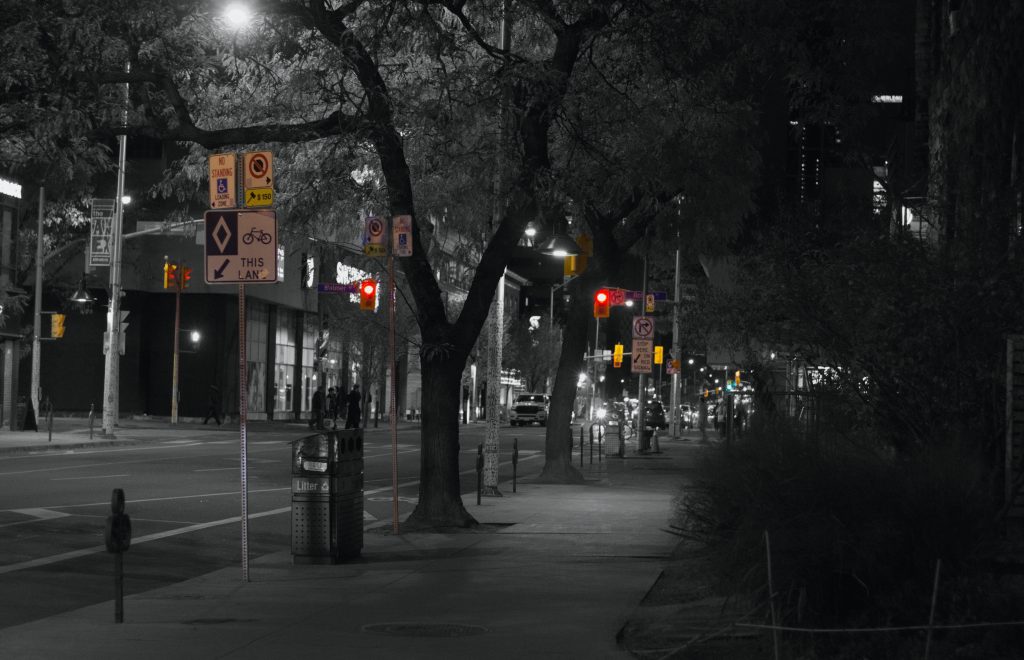
    Canadian roads have signs, just like any civilized country. Canadian roads, though, swing between extremes. On one end, you have places like Toronto and Montreal, where you need advanced degrees in mathematics to determine whether or not parking is legal at a certain time. On the other, you have long stretches of rural highways with scant signage, sometimes to the point where the cops exploit that fact to issue fines. Some of these signs are at head height, around 1.5 meters above ground level. I often wonder how many people have smacked their heads into the signs or have been left bleeding after colliding with them edge-on.

    The nature

    People from around the world come to Canada to experience the great outdoors. And great they are. The provinces and the federal government operate a world-class system of parks and nature reserves. I highly recommend visiting them because they truly are a sight to behold. The pride extends deep and I’ve seen brown immigrants picking up random bits of trash so as not to spoil the experience for the next person. Around 22 million people visited the federal parks in 2023 and around 12 million visited the Ontario parks system in 2024. These parks are popular. So popular that the camping and parking reservation websites are regularly swamped.

    Just amazing.


  • Vancouver – pleasant but needlessly expensive

    Vancouver – pleasant but needlessly expensive

    Vancouver was the first city I visited in Canada. According to the Economist, Vancouver is among the world’s most liveable cities. It is easy to see why. At the time, I lived in the Netherlands and visited Vancouver for a reason that would later become very important (my wife). I had never seen North America before and immediately after I stepped off the plane, I saw a woman with her child on a leash. A Canadian woman, travelling back from Amsterdam, had her toddler on a leash.

    I associate leashes with animals and human sex acts, not human children. This was already jarring but the visit improved from there. I have since visited Vancouver numerous times and I tremendously enjoy the city. For one, I love the ocean. Yes, Vancouver is not exactly on the open Pacific Ocean but it is close enough. I also love the air. Most cities by open water tend to have clean air. Lately, climate change and wildfires mean that Vancouver’s air is regularly among the most polluted in the world but the rest of the year, it is quite nice.

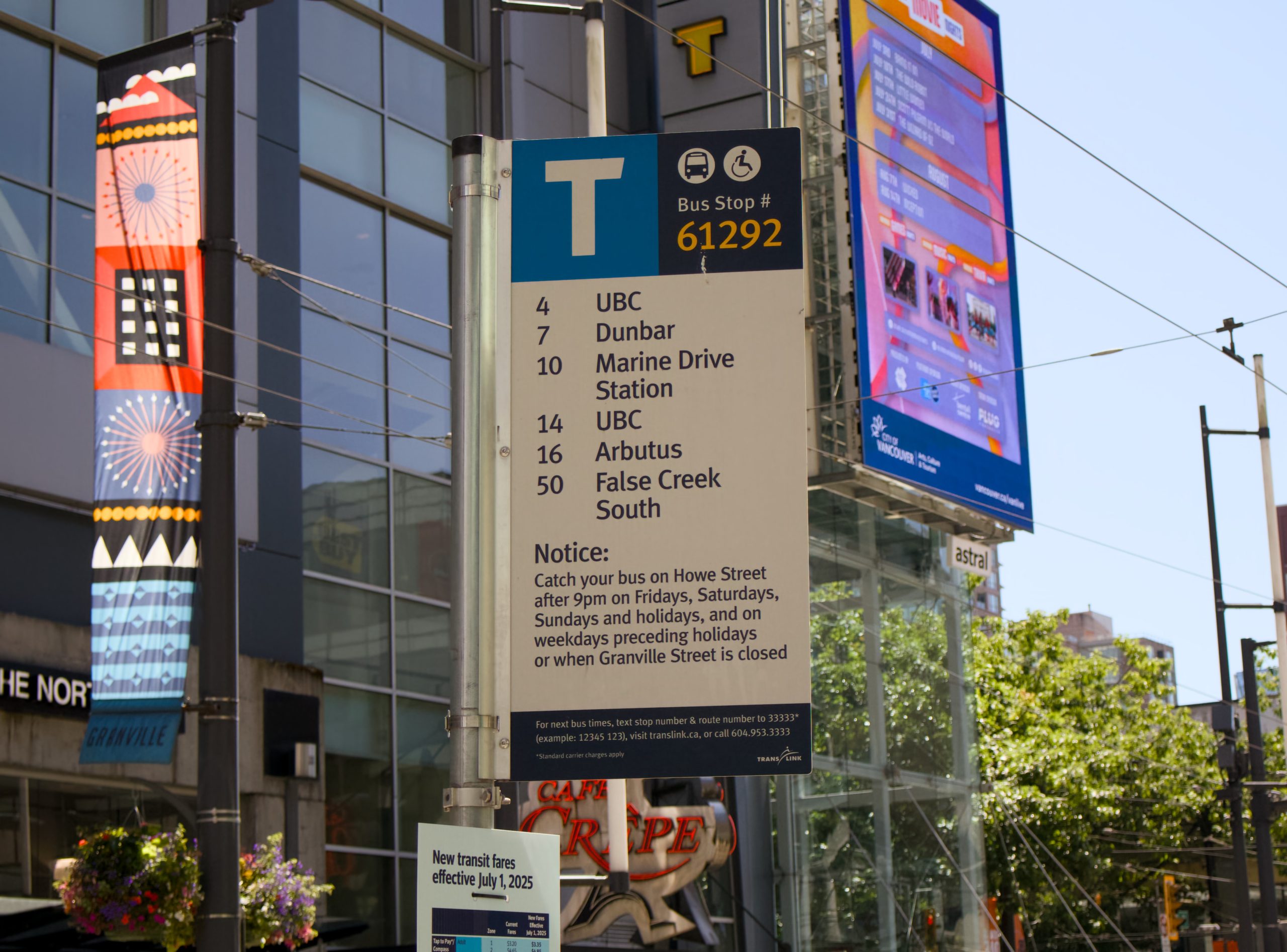
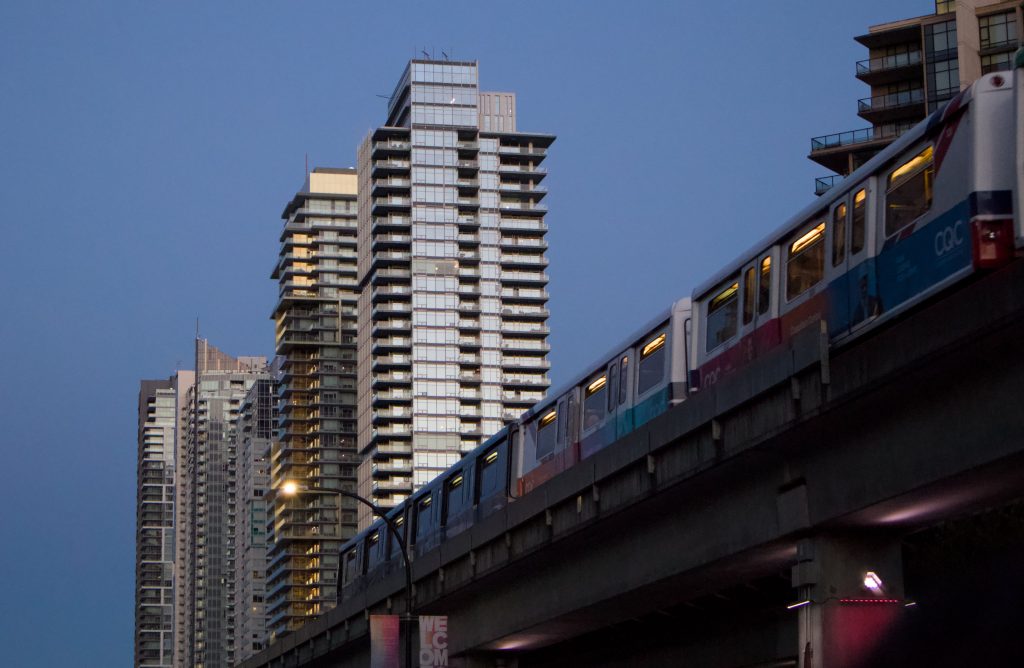
    One aspect that I especially like is the public transit. By North American standards, Vancouver’s public transit is amazing. If you live in the city proper, the bus and metro network are excellent. So excellent that you barely need a car. Contrast that with southern Ontario where the entire region is designed around cars and too many people drive vehicles the size of tanks. I feel safer on the Sky Train in Vancouver, with a homeless person nearby than driving along Ontario’s highway 401. Yes, I am inside a climate controlled pod hurtling down the asphalt at 100 km/h, but one wrong move by a danger-loving moron and I could be dead. The worst that is likely on public transit is some homeless person yelling a slur at me. Yes, the homeless problem in Vancouver is significant, innocent people have died and there is a section of the city centre that is largely unsafe, but more than one person dies on Ontario’s highway 401 and you scarcely hear about how monumentally unsafe it is.

    I made this point in the past – transit is liberating. Heck, Vancouver’s Sky Trains don’t have drivers and this is technology from the 1980s. That is real freedom. Sitting in the front of a metro train, staring out into the tracks. Some metro stations are extremely well designed. Several Sky Train stations in Burnaby integrate shopping areas, transit and walking paths. That’s how I imagine my ideal life – exit the train, buy groceries and walk home.

    People seem to be more active in Vancouver. That could be because the weather is milder or because physical activity offsets some of the crushing problems in the city. One of the most significant is the affordability crisis. Housing in unaffordable. My household is among the top 12% by income but even we would struggle to afford a one million dollar home. And mind, you, a million Canadian dollarydoos gets you into the real estate market in Vancouver, or in less polite terms, you will likely find a house that needs lots of work.

    Vancouver’s weather is terrible. Much like western Europe, ocean currents drive warm, moist air towards the poles and this tends to fall as a never ending drizzle. This drains the body and the soul but the humidity is great for plants and wildlife.

    On the upside, you can spot lots of wildlife. Blue herons and even dangerous grizzly bears. I do not recommend trying to pet a bear If you see a bear, you avoid it.

    Vancouver island is one ferry ride away. The rocky mountains are close by. If you like skiing, the national parks are a couple of hours away. The US is also nearby but I recommend avoiding their brand of freedom lest you find yourself on a detour to a prison in El Salvador.

    Would I live in Vancouver? Sure, if I could afford it. I cannot and am unlikely to ever be able to afford it on my income. Inheritances are nice, but do not count. I wonder what will happen to the city in the long term. The pressures of housing and general affordability will drive some people away. Family will push others to stay. I really hope that the city is able to get its act together and increase its density, allowing more young people to move there and stay.


  • I hate driving

    I hate driving. I hate the act of driving, I hate the thought of driving, I hate everything around driving a motor vehicle on the road for any length of time.

    What annoys me is other road users, other human beings, also engaged in the act of guiding a few metric tonnes of metal, plastic and rubber along clearly demarcated routes. The behavior of these other humans annoys me, especially in a place like South West Ontario where there is often no viable alternative to driving if you desire to displace yourself and your belongings from one location in spacetime to another. The lack of options is what annoys me. I view commuting as a chore, albeit a necessary one. I don’t mind driving short distances to a shop, a few times a month. If, on the other hand, I am forced to drive for forty minutes on Ontario’s fearsome Highway 401 (shamefully, home to the busiest stretch of highway in North America), I dread it. I dread the other drivers because you never know who is tired, high, drunk, distracted, clueless, confused, incompetent or some combination of these. That uncertainty is what scares me and is why I find myself concentrating fully on the vehicles around me, watching what they are doing and anticipating what they will do. That’s tiring and all I want to do is to read a book, play video games or just stare out the window at the sky or the world whizzing by.

    I recently drove to Ottawa and back and the journey was harrowing. On the way there, I sat in Toronto traffic for two hours. I saw numerous bad drivers and dangerous maneuvers. I do not want my personal insurance profile to change hence I give others a wide berth, often wide enough that a north American lorry can fill the gap. A journey of four and a half hours turned into seven hours. Add to this, the variety and unpredictability of weather around the great lakes and you often have to wonder, who around you is driving on summer tires in the winter and whose tires are almost bald, like Formula 1 tires but out of laziness or poverty, not design.

    A car is some amount of freedom, but it comes at a cost. Insurance, tires, maintenance, petrol, the mental load of driving. That’s not freedom.

    This is why I love public transit. That is freedom. Everyone in an urban area deserves good, reliable transit. You can go where you want, when you want, subject to schedules, of course. It bothers me that we don’t view public transit as an investment, an investment in freedom that deserves to be protected. On the train, tram, bus or metro, you can see other people. You can not see other people. You can do your own thing, you can watch someone else doing theirs. A train between Toronto and Ottawa does exist, but it isn’t cheap. Prices are comparable to a flight. When your family has four members, driving is cheaper on your pocket but driving has others costs that people don’t account for – the pubic money spent maintaining road infrastructure. Ontario spends around 13 Billion Canadian dollars to maintain road infrastructure. That’s roughly $ 900 per person, per year on just roads or about three dollars a day. People don’t really care about that money because we assume that roads will continue to be available, maintained and useable. Why can’t we assume the train will be there? A reliable bus service?


  • Build Review – Liverpool FC Anfield Mini BRXLZ Stadium

    Build Review – Liverpool FC Anfield Mini BRXLZ Stadium

    I am a bandwagon fan of the English football club Liverpool FC. I watch some matches, I recognise a few players and am moderately emotionally invested in the club’s success. I do not live in the city of Liverpool or in the UK and have visited the place only twice. Why I support this club, I cannot say. Maybe it is an innate tribalism and this was one available choice at the time? That’s the likely explanation.

    I recently visited the post-Brexit United Kingdom and made my way to Sport Direct, my favourite shop for cheap sports-themed goods. In the discount bin at the discount store, I found a couple of Premier League building block stadiums, one of which was Anfield – Liverpool’s home stadium.

    This kit is sold in two models – the mini version and the full size one. The mini version has 1,369 pieces and the full-size version has 4,650 pieces. The larger version is more life-like, as you might expect. While in line at Sports Direct, I did not know that the larger version existed. Liverpool’s website sells the larger model for GBP 65, over one hundred Canadian dollarydoos, not a price I was (or am) willing to pay. I don’t love the club that much. I bought the mini set for about GBP 24, a much more palatable price.

    I built the stadium model over approximately fifteen hours. The instructions were adequate but did not mention several pitfalls and alignment problems. The blocks themselves are small, much smaller than Lego blocks, and are fiddly to the point where you sometimes require tweezers. The block colours in the instructions are sometimes unclear. There are two shades of grey and one black and the printed colours are washed out, leading to some confusion. The attention to detail required for block placement is also a challenge, especially in a sloped stadium. The specific problem with this kit is the ascending white segments on the stands. Each is a 1 x 3 block with an overlap of 1 x 2 i.e. the blocks stack vertically, offset by one space to create the required staircase. The problem is that the entire stack is supported only at the bottom meaning that pressure anywhere above can split it. This has a tendency to happen often and there are nine such stacks. Annoying, to say the least.


    Alignment is a problem when assembling the stadium roof, as you can see in my pictures here. It is fiddly and difficult to get right with the blocks in place. Too much pressure and blocks lower down just shoot off or parts of the structure collapse.

    The small size of the blocks also means that some have imperfections from the injection moulding. The kit comes with sufficient spares so this is often not a problem but I did run into a few alignment challenges, again, as you can see on the stadium roof section.


    In all, I enjoyed the assembly process and the assembled product looks great. There is a challenge but nothing too great. At the price I paid, I would recommend but cannot recommend this at full price because of the quality control issues.

    Overall, 7/10 at the reduced price. 4/10 at full price.

    My suggestions:

    1. Look ahead and build stacks where you can. Good examples are the brown/orange stadium pillar sections.

    2. When adding 1×1 blocks to the large, flat sections, look ahead and assemble those sections before attaching to the rest of the structure.

    3. Assemble the white stacks in the stands first. Push each block as far back as it will go on the lower block i.e. aim for maximum length.

    Note the alignment issues with the stadium roof girders.
    View showing the white sections of the stands. These sections are stacked 1×3 blocks with an overlap of 1×2. Note the misaligned (blurred) middle white stack on the left stand.
    View showing the “LFC” text built from blocks. This is a nice touch and is quite stable because the blocks integrate into the adjacent rows. I enjoyed this part of the finished stadium.

  • Past Lives – Layers of complexity

    Past Lives is a 2023 romantic drama film focused on the literal past life of a Korean immigrant child in North America. The central plot line is how this child’s parents decide to leave South Korea for Canada, how the protagonist then moves to the USA for professional success, finds it, finds love and in between, reconnects with her childhood sheetheart, disconnects and then is forced to reconnect and examine their relationship.

    I will not review the film nor post spoilers. I will take another angle – the angle visible to someone who is themself an immigrant, or a double or triple immigrant depending on how you define it. The movie’s protagonist claims to have immigrated twice, first to Canada and then to the USA. I immigrated from India to Bahrain, then to India, then Finland, Sweden, the Netherlands and finally Canada.

    These moves taught me some simple truths – home is a state of mind but for some, that is intertwined with a location. Any relationship takes effort – love, friendship, siblings, parents, children. Those are thoughts for another time.

    Your name is an integral part of who you are. Not just your name, but the names your friends use. I have one legal name but several nicknames. Some friends know me as Fish. Others as Elda. Others as simply Eldrich. Each has a different connotation in my mind, a different emotion. It is much the same in the film – Na Young becomes Nora. A new name for a new life. One can pretend that your old name ceased to exist, but it doesn’t.

    Another is language. Yes, I am fluent in English but I do not speak the same English with everyone. In Canada, I stick to standard English with metaphors borrowed from cricket and football. With my friends from Bombay, I still use English but with a sauce of Hindi and a seasoning of Marathi words. With yet others in Bombay I speak English but end every sentence with “men”, similar to the Caribbean “mahn”. The inflection is also entirely different. What I say, what I mean, the phrasing, the cadence, they all change with language. Even more different is my speech in Hindi where I use English vocabulary as a crutch until I figure out what the Hindi word for encyclopedia is. (it is ज्ञानकोश or gyan-kosh; विश्वकोश or vishwa-kosh according to Collins).

    At one point, the character of Nora remarks how marriage is like two trees in the same pot. Their roots intertwine and this leads to conflict. How you deal with that conflict is important.

    Another theme in the film is the desire to outgrow your past, to not be bound by it. I too feel this sometimes. You cannot deny your past, it is forever there but it was a moment in time. A moment that has passed, with people who likely changed. You, too, changed.

    Then there is ethnicity and how it means different things in the new world versus in the old world. I am Indian. I cannot change that. Lots of people in Canada are ethnically Indian however, they are distinct from me in an important way – they are Indian AND Canadian. Both at the same time. I am not and never will be despite official documents saying otherwise. I am Indian Indian. From India, fresh off the plane, with an Indian accent and many Indian sensibilities. In the new world, cultures are often reduced to the occasional festivity, the odd piece of cultural baggage, the archaic if baseless custom, aromas in a kitchen or restaurant. In the old world, an ethnicity is who you are, your identity, your role in the world. It is how you behave, how you are expected to behave. Your ethnicity is your culture, how you carry yourself, the food you eat, the ingredients you buy, where you live. It is a curiously new-world phenomenon that your ethnicity and nationality can be distinct and different. Separate, compartmentalised, changing with the date. On diwali, you are Punjabi. Canadian on Christmas.

    Finally, your past home, your homeland, the motherland. As a first-generation migrant, you never really leave it and it never leaves you. Your relationship to it is different depending on circumstance. Some – like Syrians or Sri Lankans – have a tortured, fractious relationship with the mother country. A civil war, ethnic tensions, decades of dysfunction mean that not much of their lives are left there. A clean break for some, a swift detachment for others. In the other case – such as mine – life in the mother country goes on without you. Those you left behind carry on in peace, living their lives without you and you without them. India is not at war, there is no conflict and a large section of my extended family continue to live there. I visit them occasionally but it is a strained visit. They have changed. India has changed. My recollection of the country, of the city, of my neighbourhood is no longer reality. It was but a moment in time. A past life, maybe?


  • Japan #3 – Tokyo, the world’s most populated city and the world’s largest metropolitan economy

    The Tokyo Skytree
    Kaminarimon gate, one of two gates to the Sensō-ji shrine in Asakusa
    Tokyo is full of oases of calm, such as this.
    Invisible from the air is the greenery seen here. Yes, the built environment dominates but plants abound.

    Tokyo is a massive city. Its scale, even when seen, is difficult to comprehend. The other similarly-sized city with which I am familiar is Bombay and Bombay is quite a bit smaller than Tokyo. The Tokyo region population is around 32% higher, the GDP is over three times higher as is Tokyo’s land area. Tokyo is also infinitely cleaner and more hygienic than Bombay can ever hope to be and this is cultural, something that takes centuries to shift.

    I arrived in Tokyo and stayed in Asakusa, one of the fifty four subdivisions of the city. Asakusa was historically the entertainment district and my hotel was just across the street from the Bandai Namco offices. Asakusa is easy to reach from Haneda airport. The journey is technically on two metro lines but the same train continues on meaning you don’t even have to get off to change lines. The hotel was small – my room was around fourteen square meters in total, including the toilet. The floor is a tatami mat meaning that the unsuspecting gaijin must remove their outdoor footwear and don the indoor equivalent. Nearby is the Senso-ji jinja (temple) – Tokyo’s oldest and also the golden poo, apparently depicting the head on a mug of beer. Legend has it that the poo was supposed to be installed vertically but locals were not too thrilled and NIMBY-ism led to the structure’s eventual sideways installation. Also visible from my hotel were the Sumida river and the Tokyo Skytree, a 634 meter broadcast and observation tower that’s hard to miss. This is all Asakusa and the surrounding area. I’m telling you this to emphasis a simple point – Asakusa isn’t a particularly central area or distinctive in any way – all of Tokyo is like this.

    From a North American perspective, it is like downtown. If you visit downtown Toronto (I prefer the term ‘center’), you will see that things are close together – businesses, offices, restaurants, apartment towers and so on. There are things not visible from street level including rooftop bars, patios and so on. Once you leave downtown – and this transition is very obvious – things change. Roads are wider, there’s more wasteful single family houses and noise levels drop. Everywhere in Tokyo is downtown. In fact, a lot of old world cities are like this. The city center of Bombay is large, bustling and busy. I lived in the suburbs and right outside every suburban train station in Bombay is another downtown. Think about that – in one city, there are multiple centers. This is the bit that confuses many North Americans. I must confess that in Tokyo, even I was taken aback by the sheer scale of the city, by the diversity of experiences, flavours and choices. There are fewer, large supermarkets and more convenience stores for the things you need frequently. Bombay is exactly like this.

    Tokyo is a megacity but one unlike most others. For one, not a lot of old neighbourhood structures exist as they were flattened during the world wars. There are lots of old buildings and shrines but they are spread out. Most buildings you see from street level were built in the recent decades.

    To give you some sense of scale, there is an aerial image of Tokyo and Mount Fuji that is frequently reposted on Reddit – I copied it below. Visible at the bottom right is the Tokyo Skytree. Notable also is the apparent lack of greenery. This is misleading because Tokyo is full of greenery, just not large trees visible from above like other places. Also missing are the numerous oases of quiet and solitude – the temples, shrines and parks, miraculously insulated from the din of city life.

    Tokyo from the air, looking south. Mount Fuji is in the background. This image circulates on Reddit regularly and I am yet to find a source. I will credit the author once I identify them.

    I spent almost six days in Tokyo and I saw very little. I visited Akihabara, several shops, supermarkets and convenience stores. But Tokyo is so large you can spend a lifetime there and never really see all of it.

    Someday, I will return. Until then, memories and photos will suffice.